Social media giant Facebook has come out against proposed Australian media laws, issuing a statement today via its newsroom threatening to remove all instances of news appearing on its social media platforms in Australia if the country passes the recently drafted legislation.
Google has recently taken a similar stance against the draft law, targeting Australian internet users with warnings about claimed 'dangers' to Google services if the legislation is passed. Those alerts have appeared on the main Google search homepage, as well as across YouTube. The company also published a dedicated blog post on the matter.
Following Google's lead, Facebook has now made its own case, saying that the new regulation “misunderstands the dynamics of the internet” and that “assuming the draft code becomes law, [it] will reluctantly stop allowing publishers and people in Australia from sharing local and international news on Facebook and Instagram”.
Facebook’s threat here is a fairly large deal for Australian citizens and potentially has wider reaching implications for the world, particularly in a climate where social media platforms are trying to portray themselves as a balanced source of current affairs.
A large part of the argument from both Facebook and Google is that they claim the Australian Competition and Consumer Commission (ACCC) – the consumer watchdog behind the proposed code – has misunderstood the relationship that news media has with social media, particularly that the former is helped by the latter, rather than the other way around.
This means that both tech companies are against the notion of needing to arbitrate the balance of the financial benefits received by both news media and social media.
Other changes proposed in the draft would include forcing both Google and Facebook to provide details about changes in their algorithms to news publishers, a point which both tech titans claim will provide unfair advantages to certain news outlets and therefore upset the country’s balance within the media landscape.
In both Google and Facebook’s posts, the companies do concede that they support the notion behind the draft law – to help support struggling news outlets – but the tech giants are unhappy with how the drafted code proposes to do so.
eBay is turning 21 this month, and to celebrate, it’s serving up 21 days of deals for eBay Plus subscribers – it all kicks off today (September 1) with a discounted Nintendo Switch.
The online marketplace’s 21st birthday sale will feature a new Plus-exclusive deal almost every day, with each item dropping at 10am in most cases.
Today, you can nab a Nintendo Switch Neon for AU$385 – that’s a 23% price cut on the sought-after gaming console that typically retails for AU$499.95.
A fair warning though, you’ll need to be quick on the mouse to score this deal. eBay will only be releasing 500 units of the Nintendo Switch, and they’ll likely be released in five batches of 100 units throughout the day, starting at 10am.
There’s more excellent deals up for grabs later in the month as well. eBay Plus subscribers will have the chance to pick up a discounted pair of Sony WH-1000XM4 on Friday, September 4.
Only 300 units of the brand-new headphones will be available from 10am, down to AU$429 from their usual price of AU$548, which is a solid 22% off.
The always-popular Apple AirPods Pro will see a big price drop later in the month too, as will smart home tech from Google, and tablets from the likes of Apple and Samsung.
If you’re in the market for a new webcam for work, then the Logitech C270 webcam will be slashed to half-price for Plus subscribers, down to just AU$59 in the biggest price drop of the month.
We won’t be surprised if these deals are snapped up in flash, but there’s more to be had for those that miss out. eBay’s also treating its Plus members to plenty of other discounts, with savings of up to 70% on offer.
You’ll need to be subscribed to score these savings, so if you haven’t signed up, consider trialing the service now – eBay Plus is free for the first 30 days.
Here's the confirmed list of Plus-exclusive daily deals:
Creating a new website is a lot easier than it used to be – rather than learning HTML and CSS, you can just click and drag with your mouse and have something very professional-looking on the internet in minutes.
The wealth of website builders means you've got a great selection of tools to choose from, but it can be difficult to pick out the best from a crowd of so many. To help you narrow down your choice, we've picked five website makers that are particularly well-suited to portfolio work and offer a good balance of price points and features.
All of these site builders offer simple ways of customizing your pages once they're online, so you can regularly change the look of your work, and make sure your talents are always being well promoted on the web.
Build your next website for as little as $10.80 per month With world-class designers creating templates for every use case, Squarespace can help make your idea stand out online. Get started with one of our best-in-class website templates and customize it to fit your needs. Use the exclusive Squarespace voucher code TECHRADAR10 to get that price on the cheapest package.View Deal
Weebly was first set up with the intention of making it easy to set up a portfolio of work online, and those origins stand it in good stead today, even as it has broadened its horizons to become more of a general website builder. If you don't mind a Weebly subdomain, some ads on your site, and a limit of 500MB storage, you can actually use it for free.
While the choice of themes is relatively small, they're all fully customizable, and they all work on any size of screen, automatically reformatting to suit the display dimensions. Weebly has one of the most elegant and user-friendly website editor interfaces we've seen, so you can tweak your portfolio in exactly the way you want.
One of the many areas where Weebly excels is in the way it calmly handles a lot of technical stuff quietly in the background: it gives you enhanced SSL security by default, and (on the paid options) advanced analytics for your website, plus the option to transfer over a domain name.
If you want to get up and running quickly, would like to spend some – but not a lot – of time customizing your site, and need something that's going to be reliable and comprehensive, Weebly fits the bill. The fact that you can get started for free to see if you like it is an added bonus.
There's a lot that appeals to us about the website builder Cargo: the unconventional and varied choice of templates, the intuitive page tweaking interface you can edit them with, and the way that you can build up an entire site without paying a penny (you won't be charged until the site goes live).
It's certainly got more of an edge than other comparable website builders, which might be good or bad depending on what you're looking for. The templates available are all eye-catching and bold, and will work best for people wanting to stand out from the crowd, whether that's with photography or writing.
Every template is responsive and works on a variety of screens, while Cargo also offers some cool animated image effects you can play around with too. On top of that, the site builder is to be commended for its wide choice of fonts as well, plus, even more fonts are being added from time to time.
Besides all of the features on the surface – including an online template editor that hits a nice balance between simplicity and customization – you get 6GB of image cloud storage, unlimited pages, unlimited bandwidth, the option to transfer over a domain name if you need to, and a ton of help and support (including tutorial videos).
Built on the latest HTML5 technology and with useful extras like e-commerce and domain name support included, IM Creator is going to be too advanced and in-depth for some, but will suit other portfolio builders perfectly. That's not to say it's difficult to use – there's just more going on.
You don't need to know a shred of code to get started, there are plenty of different themes and looks to choose from, and we like the way the themes are already pre-populated with content. That means you can just edit the sample material that's already there rather than starting from scratch, which can be more daunting.
If you want to go deeper into your website building and customizations, then IM Creator makes this possible. The site editor includes a variety of gallery and slideshow options, plus image effects to drop over your uploaded pictures, and the option to change everything from the fonts used to the page margins.
We'd recommend IM Creator if you're looking to stand out from the pack – it has a wide choice of templates and some detailed editing options too. On the other hand, it does need a bit more of a time and effort investment than other site builders.
Krop is a creative jobs site and a portfolio builder rolled into one, so you know that its services are trusted by people in the same industry as you (or the same industry that you're trying to break into). What's more, its template options are some of the most well-designed that we've seen.
The website builder ticks all of the boxes that you should be looking for. Setting a site up is quick and easy, you can register a custom domain if you want to, and making tweaks to the design and layout of your pages is very straightforward too. On top of that, you get neat extras like Dropbox and Instagram syncing, and Google Analytics integration.
If you do know some CSS, then you can take more control over the way your site is designed. If not, you can just use the simple site editor instead – picking colors and fonts is as easy as clicking on a side panel.
Those of you who are looking to get a gig at the same time as building your website can of course switch straight over to the job section of the Krop site to find work – there are some big-name employers on the portal. You can try out the service with a free 14-day trial.
Considering Adobe makes some of the best creative software in the business, you would hope it knows what it's doing in terms of displaying portfolios on the web – and we're glad to report that is indeed the case.
This is slightly different to the other services we've mentioned here, because it's a free add-on to the Creative Cloud suite developed by Adobe. If you don't already pay for the programs then Portfolio is unlikely to tempt you to part with your cash, but if you are a CC subscriber, it's worth looking at this before venturing anywhere else. Worth noting that 2020 college graduates will get Adobe Portfolio free for 1 year.
While it doesn't offer as many customization and layout options as some of the other site builders we've mentioned here (although, the popular feature request - video backgrounds, has been added), Adobe Portfolio does make the process of getting your work online simple and fun. Of course there's also the tight integration with Adobe's apps, so you can easily share your work straight from Lightroom to the web. You can also purchase and connect a domain if you wish.
Pages are optimized for any device and certain ones can be password-protected if needed, and there's also the option to bring over a domain name you already own. For a simple portfolio maker that plugs right into the apps you already use (assuming that's the case), it's ideal.
A host of different services will now let you put a website online, quickly and easily, no coding skills required – but if you're looking for something to show off your talents as a musician then you need a more specific set of features.
Primarily, a way of uploading and sharing your tunes in a simple and secure way, even if it's just snippets of songs rather than whole tracks or indeed albums.
If you're a musician for hire then it can be useful to have some kind of booking system in place as well, or at least a contact form. On top of that, there are all the extras you might be interested in, like support for your own domain name or gallery pages to show just how many people came to your last gig.
Here are our picks for the best website builder for musicians to create a presence online.
Build your next website for as little as $10.80 per month With world-class designers creating templates for every use case, Squarespace can help make your idea stand out online. Get started with one of our best-in-class website templates and customize it to fit your needs. Use the exclusive Squarespace voucher code TECHRADAR10 to get that price on the cheapest package.View Deal
You won't find too many website builder services aimed specifically at musicians, but Bandzoogle gleefully jumps in to provide a bespoke service specifically for bands and artists. While it lacks some of the polish of the big names, because it focuses on the musician niche in particular, it has everything you should need.
That includes, of course, the ability to upload your own tracks and let visitors stream them from your website. You can get tracks organized into entire albums if you really want to go to town, or just share (or even sell) single tracks. And then, as well as that, you've got simple ways to post gig dates, blog updates, and so on.
Whether you need to build a contact form or a video diary, Bandzoogle makes it easy, no coding required – you can really make a site that's as simple or as complex as you like, and the end result is something that looks like you hired a specialist.
You've got over 100 themes to choose from (there is even one for crowdfunding), they're all straightforward to edit and tweak, and connecting up social accounts (including the likes of SoundCloud and Bandcamp) only takes a few clicks as well. As an added bonus, you can sell fan subscription, merchandise and tickets right through Bandzoogle as well.
Check out any list of website builders for any purpose and Wix is likely to feature on it, but not only does this service earn that high reputation, it also has some useful tools for musicians – not least the ability to upload your own tracks so visitors to your website can listen to them without any extra software or browser extensions.
Platforms that you're probably already using, like Bandsintown and Songkick, can plug directly into your Wix site: you can set up integrations like these in just a few clicks. What's more, you can add on an e-commerce portal to your site, for the purposes of shifting albums, T-shirts, or whatever else you need to sell.
Wix has a very solid selection of templates, with more than 500 to choose from, and if you delve into the music section you'll see there are options for solo artists, bands, DJs, producers, or anyone else connected to the industry. Have a click around these templates to see the kind of sites it's possible to create.
After that you've got all the features Wix has become known for: a site editor that's a breeze to use whether or not you know what CSS stands for, custom domain name support, easy blogging and simple social media support, and a free tier that lets you work out whether Wix is for you before you part with any cash.
Music Glue is a little different to the other website builder services we've featured here: it focuses first and foremost on the merchandise and ticketing aspects of the music business, and indeed powers the online stores for some of the biggest names in the industry. Its pricing system is unusual too, taking a 10% cut of whatever you sell rather than a flat fee.
That does at least mean you won't be out of pocket if your online marketplace doesn't attract much attention to begin with. There are no additional fees for payment processing, and customers can rock up with debit or credit cards, or PayPal.
Music Glue is less impressive on the website building side, although you do get the basics – a choice of themes for the site attached to your online shop, the option to bring over your own custom domain name, tools for tweaking the code and layout of your site, and so on. It's possible to plug in social media accounts and even set up a mailing list.
If your priority is the mechanics of selling music and tickets to your audience, then Music Glue is a good bet, and has some very famous clients on its books, as we mentioned. If you don't really have anything to sell right now and want to spend more time fiddling with a site design and layout, then maybe look elsewhere.
French site builder Difymusic isn't the most well-known service out there, and doesn't have the same breadth of tools and features as some of the big names – but where it really comes into its own is in getting your music online quickly and easily.
If you'd rather just get your stuff up quickly with a few pictures and links, rather than spend ages choosing a theme and editing HTML, Difymusic could be for you. It relies on plug-ins – like Spotify or SoundCloud for getting your music up, for example – but it supports an awful lot of them, so you're bound to find something that works.
If you want to sell merch and tickets, then you can pay to add that on your main site, with a one-time €9.99 setup fee (about £9 or $12) and then 5% commission based on sales, but the basics are free. Connect up your Facebook page and your YouTube channel and you're good to go in just a few minutes.
Admittedly the choice of templates and editing options aren't very strong, but the designs you can play around with are decent enough, and certainly won't put anyone off your music. Difymusic lets you get started quickly, and scale up as required.
Tumblr isn't a website builder in the conventional sense – it's more of a half blogging, half social media platform – but if you take a longer look at what Tumblr has to offer, it's actual very appealing for musicians. For one thing, it's completely free to use, plus it already attracts a busy community of creatives.
You can post up to one 10MB MP3 file every day, as well as links, text posts, videos, photos and more. Those MP3s appear as streamable files for visitors to your site – they can listen to the tunes in their browser, no plug-ins or extra software required, so it's a great way of showcasing your talents without paying anything.
If Tumblr was simply a blogging platform and that was it, we probably wouldn't recommend the service, but it also supports pages alongside your blog (for a gallery or a contact form), custom domain names (so you can pay extra for whatever URL name you like), and posting from mobile apps too.
On top of all that there are a host of themes to choose from, some of which cost money, but many are free, and a lot of them would suit a musician's portfolio. If the theme isn't exactly to your liking, you can tweak it with the integrated options or your own CSS, and switching between themes whenever you like is simple, too.
After dominating the telecom market, Reliance Jio Infocomm (generally referred to as Reliance Jio or even just Jio) now aims to disrupt the home broadband segment. The company has now announced new affordable plans for its JioFiber broadband starting at Rs. 399 per month offering truly unlimited internet access, 30 days no question asked trial period.
The revamped plans also include an Rs. 699 per month plan that offers data at 100 Mbps, Rs. 999 plan that offers 150 Mbps speed and an Rs. 1499 plan that offers 300 Mbps speed. All these plans are truly unlimited and do not come with an upper limit of usage.
The company has also announced that these plans include unlimited voice calling and symmetric data speeds which essentially means that the download and upload speeds will remain similar.
The revamped plans also offer a 4K set-top box free with plans above Rs. 999 offering paid subscription to 11 premium OTT apps while the Rs. 1499 plan offers a subscription to 12 OTT apps. These OTT applications include Netflix, Amazon, Disney+ Hotstar, SonyLiv, Zee5, ShemarooMe, LionsGatePlay, Voot etc.
Other plans that the company offers are an Rs. 2499 rental plan offering 500 Mbps speed up to 4000GB per month, an Rs. 3,499 plan offering 1Gbps speed up to 7,500 GB and an Rs. 8,499 plan offering 15,000 GB data per month.
Jio is now also offering a No-condition Free 30-day trial of 30 days to users registering from September 1 onwards. During this trial period, Jio will offer free internet at 150 Mbps though users need to pay fully refundable security of Rs. 1,500 and it does not include access to Jio Set-top box and OTT services. In case you want to test out the set-top box and the OTT apps, then Rs. 2500 needs to be paid as initial security.
These new plans are a drastic improvement over the erstwhile plans that came with a lot of riders and silly FUPs that rendered the “Fiber” moniker useless. Even the idea of limiting the upload speed to 10% of the download plan was not appreciated by the users.
However, with the introduction of these new and simpler plans, Reliance Jio has started a price war in the home-broadband segment and it would be interesting to see what its competitors - Airtel, Act Fiber, Tata Sky Broadband etc. decide to come up with.
Just a day after Reliance Retail gobbled up Kishore Biyani's Future Group, the new is that the Mukesh Ambani-owned company is looking to sell a minority stake in it, and one of the front-runners for picking it is Walmart.
The world's biggest retailer looking to pick up a stake in India's largest retailer is doubtless significant.
For, if it indeed happens, it would be biggest consolidation of forces against Amazon.
According to a report in the online news site The Morning Context, the two companies are already in discussions. Quoting an executive familiar with the development, the report said Walmart has emerged as an early candidate to pick up a stake in Reliance Retail.
It may be recalled that addressing shareholders at Reliance Industries 43rd annual general meeting recently, Mukesh Ambani had said "Reliance Retail has received strong interest from strategic and financial investors."
He also made it clear the company will induct global partners and investors for the retail business in the next few quarters.
Mukesh Ambani is scouting for investors in his retail business with a deadline of March 2021. If Reliance wants a strong partner with proven execution skills in India, it is left with two options—Walmart and Amazon. Story by @varunstweets https://t.co/dTg6bpqf7DAugust 31, 2020
Expansion plans for Reliance Retail
Reliance Retail is India's largest and most profitable retailer. In 2019-20, Reliance Retail revenue was Rs 1,62,936 crore.
Ambani said in the last five years, the retail business revenue grew 8 times and profit 11 times. "This positions us well in the years ahead to continue delivering on our promise of exponential growth," he had said.
Around two-thirds of nearly 12,000 Reliance Retail stores are operated in tier II, III and IV towns, Ambani said.
Ambani explained his plans to add newer categories like electronics, fashion, pharmaceutical and healthcare into its omni-channel venture, JioMart.
Reliance Retail's deal with Future Group will help expand its retail footprint and warehousing area by over 80%. It is also expected to add 4.1% to Reliance’s market share of organised retail and take it to 17.8%.
Reliance Retail is valued at $72 billion. Walmart already owns 81% of Flipkart. Walmart-owned Flipkart and JioMart (which is Reliance Retail and Jio Platforms joint venture) are already in competition.
Happening time for Walmart-owned Flipkart, too
Walmart-owned Flipkart recently announced the launch of its hyperlocal services, Flipkart Quick, in Bengaluru. Flipkart also recently acquired Walmart's local cash-and-carry business to strengthen its wholesale offerings to mom-and-pop stores.
Flipkart is also rolling out 'dark stores', which are essentially shops or outlets operated to service customers in nearby localities, across several cities in India.
So these two rivals coming together, if at all it eventualizes, would be to take on the common rival Amazon which is trying to consolidate its business in India.
But existing rules for foreign players and the general competition from behemoths like Reliance are making the going difficult for Jeff Bezos' company.
The Ambani-Amazon face off is being billed as a major battle in the Indian e-commerce sphere.
The pandemic and the subsequent lockdown may have kept quiet many companies but not Reliance. In the digital arena, its subsidiary Jio Platforms has made remarkable deals with some of the big-ticket companies including the big daddies Facebook and Google.
Recently, it also made a foray into online pharmacy and acquired a majority stake in Netmeds for Rs 620 crore.
As seasoned Apple tablet watchers will know, the iPad Pro ditched the home button and went all-in on Face ID in 2018, so it was only a matter of time before the other iPads followed suit – and it looks like Apple is now ready to make the switch.
A couple of leaks over the weekend suggest that the full-screen, thin-bezel, home-button-less look of the iPad Pros is coming to Apple's other slates – perhaps the entry-level iPad, perhaps the iPad Air, or perhaps both.
First up Twitter tipster @duanrui1205 has shared images of what is supposedly the manual for the upcoming iPad Air 4 – the pictures show a design without a home button but also mention Touch ID. USB-C is also referred to.
The assumption is that Touch ID will be built into the power button – something that would maybe help keep the price more affordable, compared with the top-level iPad Pros and their advanced Face ID camera trickery.
iPad Air 4Touch IDvia 小红书 pic.twitter.com/2jc09uAKUYAugust 27, 2020
Next, we have leaked schematics from 91mobiles that purport to show a new 10.8-inch entry level iPad. Again, there is an iPad Pro-style overhaul, with the home button disappearing and USB-C arriving. In this case, Face ID is included, and support for the new Magic Keyboard is also mentioned.
While a 10.8-inch iPad has been tipped for a 2020 launch in the past – by well-respected analyst Ming-Chi Kuo no less – it would seem strange for the cheapest iPad to include Face ID while the more expensive iPad Air sticks with Touch ID (albeit on the power button).
It is of course possible that one or both of these leaks aren't accurate or authentic, or that they don't refer to the iPad models that they think they do. That said, it does seem the right time for Apple to bring more uniformity to the design of its iPad range, across all the different models and price points.
Something we can be sure about is that more iPads are on the way, as revealed by regulatory filings spotted last week. Don't be surprised if they come with an iPad Pro look, even if they don't exactly match up with the leaks we've seen here.
The Indian e-commerce space, which has been showing incipient signs of recovery, is hoping to further improve its showing in the oncoming festival season.
For this festival season --- typically from before the Dusshera time and running till New Year or oven Pongal in the Southern States --- the e-commerce platforms are expecting a 30% increase from their last year's figure in sales.
The surge in sales is based on the increase in online shopping ever since the social distancing norms came into place. A slew of new launches across diverse products is also seen as a positive cause.
Hope is further buoyed by the fact that two of the biggest online players in India, Amazon and Flipkart, recorded a combined sales in the range of Rs 5,600 crore -Rs 6,000 crore during their Prime Day and Big Savings Days sale events in August.
According to a report in the Economic Times, which quoted executives at online marketplaces, "new models of smartphones, work-from-home and study-from-home enablers are expected to drive sales, while apparel and fashion sales will still remain a little weak".
Home, appliance, sports, fitness and health are the other categories that look to make impressive recovery.
If the wedding season kicks in even apparel and fashion market would get a bump in sales.
As we said, the festival season is a long, over-two-months window in India. Usually, Amazon has its Great Indian Festival sale and Flipkart holds its The Big Billion Day sale around this time. Last year, the two platforms, according to the Economic Times report, recorded about $3.5-3.7 billion in sales in the highest-selling six days, a rise of 33% over 2018. In the overall 2019 festive sale period, these platforms clocked $4.8 billion in sales.
Amazon and Flipkart have said that they would help their sellers make a comeback in what has been a tough season due to the economic lockdown.
Even though the number of Covid-19 cases in India are far from subsiding, the curbs are being lifted across States and mobility is expected to improve since September 1. This should help e-commerce companies to straighten out their logistical chain.
Also, e-commerce portals are expecting tier-2 cities to lead the charge for fresh demand.
In general, India’s e-commerce sector has been on a constant growth, the e-commerce order volume saw a growth of 20% while the GMV (Gross Merchandise Value) witnessed a surge of 23% with an average order size of Rs 1100.
Once Android 11 rolls out, the list of phones that can use wireless Android Auto will grow considerably. Google has updated Android Auto’s FAQ page (as spotted by 9to5Google) to add that almost all devices installed with the upcoming mobile OS will get the capability to connect to compatible in-car entertainment systems without a wire. The updated page also notes that your phone must support 5GHz WiFi for wireless connection to work.
'When do we go back to school?' is the biggest question on the minds of students, teachers and parents in 2020, according to each of the groups we talked to.
There's no one easy answer, either, with varying dates for each country, region and even school district. Many are planning a late September back to school date, while others down the street have decided to postpone in-person learning until 2021. A few schools went back in August only to shut down again.
You're not alone in thinking it's become unpredictable – the Covid-19 pandemic has upended the 2020-2021 academic schedule. Sorry kids, school won't be cancelled, as distanced learning online will take place for many districts, though most students and parents we talked to said they're eager for in-person classes to resume.
Here are the most popular back to school dates, from the districts and parents we talked to in Pennsylvania, California and New York.
End of September
Some US schools are already back in session as of mid-August, but even in a typical year a majority of colleges, high schools, middle schools and elementary schools won't return until after Labor Day, which is Monday, September 7 this year.
Now, many schools are delaying reopening and missing the post-Labor Day weekend window by a long shot. We talked to a number of public school districts that have voted to postpone the start of their school year to the end of September.
We're told the thinking of is this: all of the public and private schools that plan to reopen in early September may dictate whether or not the late September schools actually go through with their reopening plan. It's a wait, watch and see approach.
If Covid-19 cases surge in those schools that resume classes the earliest, there's a chance reopening could be delayed or, at the very least, prevention measures may be adjusted in the late September schools.
There's a critical window in which school administrators will be evaluating what happens at those early September schools throughout the US.
(Image credit: Shutterstock)
Alternating in-person school days
Some schools are returning in September and October, but splitting up the amount of students who can enter the school building at any one time. This makes staying six feet apart easier, preventing what we saw in a packed Georgia school hallway.
Districts we talked to have laid out a plan to have half of their normal amount of students go back to school on Monday and Tuesday, and the other half attend the in-person classes on Thursday and Friday. Which days students go back is based on their names (last names, so that families can go in to classes at the same time).
Wednesday would act as a cleaning day, allowing schools officials to decontaminate classrooms over the course of a little over 24 hours. Distanced learning will happen on Wednesday and the days in which students won't attend in-person.
2021 school start
The third popular option we're seeing is to continue distanced learning throughout 2020, with plans to return to in-person learning in January of 2021. That would put these students out of the classroom for almost an entire year by that point.
This is clearly one of the safest options for teachers, students and the parents and grandparents those students come home to. But the problem is that not all districts have the ability to foster a rich learning environment from students homes.
As we saw at the end of the 2019-2020 school year, obtaining the free student meals that many rely on will continue to face hurdles. And even when affordability isn't a problem, supply is: we saw demand spike in the first half of the year for the best laptops and people desperately trying to find webcams in stock.
(Image credit: Shutterstock.com / Jacob Lund)
When will we go back to school: conclusions
There are so many moving parts to back to school 2020, and school districts seem to be adjusting their plans as new Covid-19 data comes in, formidable teachers unions raise their voices, and more parents have their say.
While the three back to school dates above are the most popular from the people we talked to, the plans for when we go back to school are not set in stone by any means. Likewise, our usual cavalcade of back to school content has been transformed, and could shift again for all we know.
MacBook deals that come under £1,000 are a rarity, which is why this weekend's bank holiday sales are so impressive. You'll find a 2019 13-inch MacBook Pro available for just £998 at Currys right now, an excellent price for last year's model packing 8GB RAM and a 128GB SSD.
We've seen this configuration drop down to £1,100 in the past, but it's not seen a price tag below £1,000 yet. Plus, other retailers still have this model pitched at a far more expensive price point, so this offer really won't stick around once the masses get their hands on it.
We don't know how long this MacBook deal will last, but with attention turned to the bank holiday sales we're willing to bet it won't be around much longer. That means we wouldn't sit too long on this excellent offer, although if you would like more options we're also rounding up the best MacBook Pro deals around right here on TechRadar.
You can find more information about this deal just below, with plenty more prices in the US further down the page. Or, check out all the latest bank holiday sales right here.
Today's best MacBook deal in the bank holiday sales
2019 13-inch MacBook Pro:£998.97 at Currys We've seen MacBook Pro deals hitting £1,100 over the last few weeks, but this offer from Currys comes in a cut above the rest. You're picking up an entry level model here, sure, but even an 8GB / 128GB SSD configuration is rare to find under £1,000. View Deal
If you want to size up the competition first, or you're after more MacBook deals in the US or Australia, you'll find all the cheapest prices from around the web in our comparison chart just below.
As was widely expected, The Mukesh Ambani-led Reliance Industries announced its acquisition of the Future Group for Rs 24,713 crore ($3.38 billion) late on Saturday night. With this, the company, which launched the wholly-owned subsidiary JioMart recently, has taken another step towards becoming India's largest retailer and eCommerce player.
Following the deal, Reliance Retail would have access to more than 1,800 stores across the brands that Future Group owns including Big Bazaar, FBB, Easyday, Central, and Foodhall. These stores are spread across 420 cities in India.
The deal was negotiated and announced barely two days before August 31, which is when the moratorium provided by banks in India to its lenders under guidance from the federal government ends. The moratorium was part of government's initiatives to help business sustain through the lockdown period.
In a prepared statement, the company said, "Reliance Retail Ventures Ltd (RRVL), subsidiary of Reliance Industries Ltd will acquire the retail and wholesale business and the logistics and warehousing business from the Future Group as going concerns on a slump sale basis for lumpsum aggregate consideration of Rs 24,713 crore."
Under the terms of sale for which Reliance paid $3.38 billion, including debt, both the retail and wholesale undertakings of the Future Group, would be transferred to to Reliance Retail and Fashion Lifestyle Limited, a wholly owned subsidiary of RRVL, while the logistics and warehousing business will be transferred directly to RRVL.
The deal also envisages a further investment of Rs.1600 crore ($218 million) via preferential shares and warrants to acquire a further 13.14% stake in Future Enterprises Ltd. which would see the group's remaining business valued at $2.87 billion. Post this deal, Future Group will retain the manufacturing and distribution of FMCG goods and the integrated fashion sourcing and manufacturing business that includes its deals with Generali and NTC Mills.
Post the deal, five listed units of the Future Group that includes its play in grocery, apparel, supply chain and consumer business, would merge into Future Enterprises Limited (FEL), which is the entity that manages its retail infrastructure backend currently. In a prepared statement, the company said this would help FEL focus on manufacturing and distribution of FMCG products and integrated fashion sourcing and merchandising.
Given the supply agreement with Reliance Retail, the refurbished distribution entity would further benefit in the short to medium term in terms of a stronger balance sheet that the company would have, the Future Group said in a prepared statement. Such a deal could also help the company repay some of its burgeoning debt.
Besides group-level debts, the banks claim an exposure of Rs.11,970 crore to the promoter of the Future Group, Kishore Biyani. In the past, the lenders have sought access to the group's real estate portfolio that was hived off as a separate company. In addition, it was also reported that Reliance had nudged Future Group's vendors to take a 40% haircut to stave off further cash flow challenges.
What it means to Reliance Retail
The acquisition of the retail, wholesale and supply chain business of the Future Group complements and makes a strong strategic fit into Reliance’s retail business. The deal will help Reliance Retail to expand its offline retail presence, too.
Reliance Retail is the largest retailer in the country operating 11,784 outlets. Reliance Industries' digital subsidiary Jio Platforms has also unveiled recently JioMart, the digital platform that will connect neighbourhood grocery shops with consumers. It will leverage into Reliance Retail's infrastructure and ecosytem.
Reliance Retail’s business footprint spans across 11,806 retail stores in over 7,000 towns with 28.7 million sq ft of retail space.
Amazon pipped in India
Amazon had earlier last year picked up a 49 per cent stake in Future Coupons, a promoter group entity, through a complex deal. Amazon also wanted to acquire some parts of the Future Group, especially its much vaunted logistical arm.
But the various restrictions on FDI in multi-brand retail for foreign players have put paid to Amazon's plans, and it is Reliance Retail that has moved into the driver's seat in this battle of supremacy.
The other e-commerce player in India, the Walmart-owned Flipkart is also upping the ante. Flipkart has announced the launch of its hyperlocal services, Flipkart Quick, in Bengaluru. Flipkart also recently acquired Walmart's local cash-and-carry business to strengthen its wholesale offerings to mom-and-pop stores.
Flipkart is also rolling out 'dark stores', which are essentially shops or outlets operated to service customers in nearby localities, across several cities in India.
The pandemic and the subsequent lockdown may have kept quiet many companies but not Reliance. In the digital arena, its subsidiary Jio Platforms has made remarkable deals with some of the big-ticket companies including the big daddies Facebook and Google.
Recently, it also made a foray into online pharmacy and acquired a majority stake in Netmeds for Rs 620 crore.
These MacBook deals are taking the early Labor Day sales by storm this weekend, offering big savings on everything from super cheap MacBook Airs to the best of the MacBook Pro lineup. That means you can secure yourself a discount whether you're looking to spend under $1,000 or well over.
At just $899, this MacBook Air deal is one of the best we've seen yet. All in you're picking up a $100 discount and a free pair of AirPods when you pick up a 256GB / 8GB Air model (but you can also upgrade to a 512GB as well). Apple rarely discounts these latest releases so soon, so the combination of cash off and a free gift makes this a particularly compelling MacBook deal.
However, the Labor Day sales are also seeing plenty of MacBook Pros on offer this weekend as well - perfect if you need a little more power under the hood. You'll find the latest 2020 13-inch MacBook Pro with a $200 discount at Amazon right now. That means you can pick up a 256GB model for just $1,599 or a 1TB build for $1,799. And at this price range, we'd definitely swallow the extra $200 to upgrade.
We're highlighting all these MacBook deals and more just below, but you can also shop plenty more Labor Day sales right here at TechRadar as well. If you're shopping in the UK or Australia, you'll find all the latest prices further down the page.
The best MacBook deals in the early Labor Day sales
2020 MacBook Air | AirPods |$999$899 at Apple Not only will you find the latest 2020 MacBook Air available for $100 less at Apple this weekend, but you can also grab a free pair of AirPods or upgrade to AirPods Pro at the same time. That's excellent value on one of the cheapest MacBooks yet, and you're not even skimping under the hood either - there's 8GB RAM and 256GB of SSD storage in here - hardly entry level specs. View Deal
2019 13-inch MacBook Pro |$1,499$1,199 at B&H Photo You'll find more power available in the 2019 MacBook Pro, however. With the same 8GB / 256GB SSD on offer you're keeping the excellent memory and storage of the MacBook deals above, but this is a slightly more powerful model as well. You're saving $300 at B&H Photo in these early Labor Day sales, and you can save on a range of software bundles at the same time. View Deal
2020 MacBook Pro 13-inch - 512GB:$1,799$1,599 at Amazon The 512GB MacBook Pro is available for $200 less at Amazon right now, offering up the latest MacBook Pro to hit the market for $1,599. You're getting a boosted 2.0GHz i5 processor in here as well, excellent power with extra value in this MacBook deal as well. If you want to upgrade to a 1TB SSD you'll also find the same saving on a larger model, now down to $1,799. View Deal
2020 MacBook Pro 16-inch - 1TB:$2,799$2,499 at Amazon You'll find a $300 saving on this super powerful MacBook Pro 16-inch in this weekend's early Labor Day sales. You're picking up a fantastic spec here as well, with a 1TB SSD and 2.3GHz i9 processor. View Deal
More MacBook deals
Whether you're in the US and simply want to see what else is out there, or you're in the UK or Australia, you'll find plenty more MacBook deals in our price comparison widget below. That means all the cheapest prices from around the web are right here, so you'll never miss out on a sale.
Shop all the best cheap MacBook Air deals right here on TechRadar, or you can take a look at the latest MacBook Pro sales. Plus, we're also rounding up the latest iPad Pro deals if you're looking for something a little more flexible as well.
from TechRadar - All the latest technology news https://ift.tt/3gAgXMM
via IFTTT












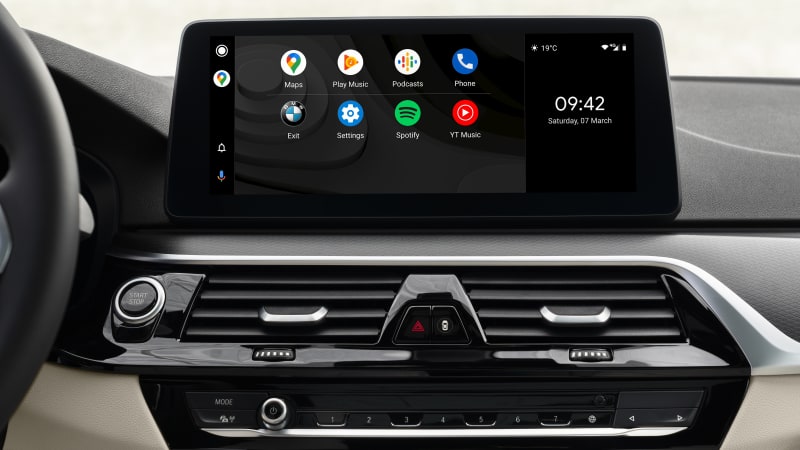 Once Android 11 rolls out, the list of phones that can use wireless Android Auto will grow considerably. Google has updated Android Auto’s FAQ page (as spotted by 9to5Google) to add that almost all devices installed with the upcoming mobile OS will get the capability to connect to compatible in-car entertainment systems without a wire. The updated page also notes that your phone must support 5GHz WiFi for wireless connection to work.