Tuesday, January 31, 2023

Government promises robust crypto regulation

Proposals are being set out as scandals and tumbling values raise questions about the industry's future.

source https://www.bbc.co.uk/news/technology-64468617?at_medium=RSS&at_campaign=KARANGA

Monday, January 30, 2023

Foldable iPad may launch early 2024, according to top Apple analyst

A foldable iPad with a carbon fiber kickstand is reportedly in the works and may launch early 2024.

This information comes from notable Apple tipster Ming-Chi Kuo via a Twitter thread. While there isn’t much to be gleaned from the short thread, what he reveals paints a rather interesting picture for the tech giant in 2023. According to Kuo, Chinese manufacturer Anjie Technology will be supplying the carbon fiber kickstand for the new device and is expected to benefit greatly from this “growing trend of foldable devices equipped with kickstands.” He goes on to say the upcoming iPad will launch alongside a revamped iPad Mini which is “likely to begin mass production” during the same time period. As for the near future, things are going to be a little unfriendly towards consumers. Kuo says it’s possible “there may be no new iPad releases in the next [nine to 12] months” as Apple works on its upcoming devices. He also predicts iPad shipments will dip 10 to 15 percent year-over-year in 2023.

The NPD Group, a market research company, reports tech sales in the US is “expected to end 2022 down eight percent year-over-year.” That number is slated to go down an extra five percent this year. With consumer spending set to go down, it appears Apple is battening down the hatches for a rocky 2023. Despite the near future looking a little dour, Kuo states he’s positive both the foldable iPad and new iPad Mini model “will boost shipments [plus] improve the product mix.” 

Prevailing rumors

News of foldable Apple devices have been circulating around the internet for the past couple years or so. Back in 2021, Kuo stated a foldable iPhone with an eight inch screen is supposed to release this year. However, considering the “key technology and mass production issues” affecting the device, it probably won’t happen just yet. At the earliest, this “iPhone Flip,” as it’s sometimes referred to, is expected to launch sometime in 2025 and will be very expensive. One leak suggests the price tag is hovering around an eye-watering $2,500.

Between a foldable iPad and iPhone, analyst firm CCS Insights argues the former is more likely to happen first due to how expensive a foldable smartphone will be plus the inevitable technical issues said device will have to face. Something has to metaphorically get bloody first. It might as well be the iPad and nothing as “high profile as an iPhone.” Samsung lends credence to this theory as it predicts Apple is set to launch its first foldable next year too. Just like CCS Insights, the Android giant also thinks it’s going to be some kind of tablet.

So it looks like a foldable Apple device is nothing short of an inevitability at this point. Just don’t expect either iPad model or an iPhone Flip to make an appearance at this year’s WWDC23 event. The company is playing its cards close to its chest right now.

If you’re interested in getting a foldable phone, you’ll have to buy an Android for that. Be sure to TechRadar’s recently updated best foldable phones list for 2023 featuring the likes of the Huawei Mate XS and the Galaxy Fold 4. 



from TechRadar - All the latest technology news https://ift.tt/Iz02VU4
via IFTTT

Apple Music launches Rihanna’s Road to Halftime ahead of Super Bowl LVII

Apple Music is preparing to bring Rihanna fans front and center for the singer’s highly anticipated Apple Music Super Bowl Halftime Show.

Friday, January 27, 2023

The Google Pixel Tablet could be the Pixel Tablet Pro in all but name

A while ago, one leak suggested Google might be working on a Pixel Tablet Pro alongside the standard Pixel Tablet, but now it looks like that standard slate has been scrapped, with only the Pro remaining.

This claim comes from Twitter user Kuba Wojciechowski, who says that the only major difference between the standard Pixel Tablet and the Pixel Tablet Pro is the chipset – with the former using the original Tensor chipset found in the Pixel 6 series, and the Pro using the Tensor G2, found in the Pixel 7 series.

So unless Google is aiming for a budget slate, it makes sense to cancel the Tensor G1-powered model – as it apparently has done – as that would be a too dated by launch time.

See more

Google, for its part, has already confirmed that the Pixel Tablet will use the Tensor G2, so there’s not much new here. We also wouldn’t expect the slate to launch with 'Pro' in the name – that element was seemingly used in the codename to differentiate it from the Tensor G1 model but if only one lands, there’s no real need to flag it as a Pro version.

Still, there is some genuinely new stuff here too. The same poster claims to have learned about some additional specs from an anonymous source, saying that the Pixel Tablet apparently has a 1600 x 2560 LCD display, 8GB of RAM, 256GB of storage, and a side-mounted fingerprint scanner.

There will also apparently be two different docks for the device. One of these – the Charging Speaker Dock – has already been revealed by Google, but there’s apparently also one that just charges it and doesn’t have a speaker. In both cases these allow the slate to double as a smart home display.

Finally, Wojciechowski has included some new images of the Pixel Tablet and one of its docks, but Google has already shown these elements off, so there’s nothing more really new to see.

See more

Analysis: shaping up to be a OnePlus Pad rival

A recent teaser and specs leaks for the OnePlus Pad suggest that OnePlus’s upcoming Android tablet could be a mid-range device, and what we’re seeing of the Pixel Tablet also points in that direction, so these two slates could be directly competing with each other.

If the leaks above are right, then Google's has a surprising amount of storage – unless lower capacities are also made available – but otherwise looks to be packing fairly mid-range specs.

It could have the edge over the OnePlus Pad in certain ways, most notably its skills as a smart display, but then the OnePlus Pad may well have an OLED screen – which is typically superior to the LCD rumored here.

OnePlus’s tablet will almost certainly launch sooner too. It's landing on February 7 alongside the OnePlus 11, while the Pixel Tablet’s launch date is currently unknown.


from TechRadar - All the latest technology news https://ift.tt/568S3xT
via IFTTT

Thursday, January 26, 2023

Warning over risky electric blankets sold online

The consumer rights group Which? found products being sold online that could cause electric shocks.

source https://www.bbc.co.uk/news/technology-64418949?at_medium=RSS&at_campaign=KARANGA

Exclusive: here’s your first look at the OnePlus Pad, launching alongside the OnePlus 11

The OnePlus 11 is getting its global launch on February 7, but it won’t be alone, because OnePlus has confirmed to TechRadar that the OnePlus Pad will be launching alongside it. Better yet – the company's even shared the first image of the tablet with us, giving you the first official look at the slate.

You can see that picture at the top of this article, with the company’s first tablet coming in a Halo Green shade, which OnePlus claims “blends the vibrancy of life with the vastness of space”. There may be other colors offered too, but this is the only one we’ve been told about.

The design of the OnePlus Pad includes an aluminum alloy body and a cambered frame, which should make it comfortable to hold for extended periods, according to OnePlus.

There’s a single-lens camera jutting out of the rear in a central position, which is apparently an ideal position for taking photos, since it’s more lined up with your own view than it would be on the edge.

You can see that on the front there’s also a single-lens camera, this time built into the bezel above the display, along the top edge.

We don’t have a full view of the OnePlus Pad or any indication of the specs, other than the number of cameras, but from what we can see, it seems this could be quite an attractive slate, and one with a reasonably premium appearance.

The small number of cameras shouldn’t be a problem either, since tablets are few people’s main device for snapping photos or videos.

We’ll learn plenty more about the OnePlus Pad soon, since February 7 is fast approaching, and with most details of the OnePlus 11 already known, this could actually be the more interesting element of the big launch event.


A slightly larger view of the OnePlus Pad (Image credit: OnePlus)

Analysis: a much-needed new entry in the Android tablet market

While a lot of questions remain about the OnePlus Pad, its mere existence is cause for celebration, as currently the Android tablet market is dominated primarily by Samsung at the top end and Amazon lower down.

The OnePlus Pad could perhaps offer a tempting option between those two extremes – depending on the specs and price. Coming from OnePlus, there’s a good chance that it will be competitively priced wherever it sits in the market though, so this could end up making either our best tablets or best cheap tablets list.


from TechRadar - All the latest technology news https://ift.tt/TFJvi6C
via IFTTT

Wednesday, January 25, 2023

Apple, why the heck is my new MacBook’s SSD so slow?

If you’re considering picking up one of the newly-released MacBook Pro M2 models, watch out: it looks like Apple has cut some corners (presumably in the name of keeping manufacturing costs down) when it comes to the SSD found in the entry-level iterations of the new laptop.

As spotted by @ZONEofTECH on Twitter, the 512GB drive found in the base configuration of the 2023 MacBook Pro is significantly slower than the SSD used in the previous M1-powered model. It’s a fairly major drop; over 400MB/s slower writes and almost 1,400MB/s slower reads.

This Tweet was later corroborated by 9To5Mac, who ran their own tests and received similar results. Unlike @ZONEofTECH, though, 9To5Mac went one step beyond and cracked open their M2 MacBook Pro to take a closer look at the storage on the motherboard itself.

See more

What they found confirmed @ZONEofTECH’s suspicions: the 512GB M2 MacBook Pro uses fewer NAND modules than its predecessor, resulting in slower performance. Modern integrated SSDs commonly utilize multiple NAND chips for storage; the 512GB of storage in the M1 MacBook Pro was distributed across four 128GB chips (previously confirmed in a teardown by hardware repair site iFixit), while it looks like the new model only has two NAND chips - presumably 256GB each.

Analysis: How serious a problem is this, really?

I’m going to go out on a limb here and say that this isn’t actually the disaster some commentators have claimed it to be. Sure, the SSD speed drop is disappointing, but it’s not a difference that the average user will notice. The dual-NAND 512GB SSD is still pretty speedy, to the point where your internet speed is more likely to be a bottleneck for downloads anyway.

If you’re looking for a MacBook Pro deal, I can confirm that the 1TB and above configurations don’t seem to share the same problem. I should certainly hope not, too; it’s $200/£200 to upgrade from the base 512GB drive, a hefty fee considering that you can easily snag a perfectly good half-terabyte of PC storage for under fifty bucks via our SSD deals page.

A great SSD shouldn’t cost so much, and considering that this is a ‘Pro’ product with an already-high price tag starting at $1,999 (and already carries the infamous Apple Tax), it’s particularly offputting. This isn’t a first offense, either; as Tom’s Hardware pointed out last year, Apple pulled the same stunt with the entry-level M2 MacBook Pro 13-inch.

Intriguingly, it looks like the entry-level 256GB M2 Mac mini has the exact same issue, apparently using a single NAND module instead of the two chips found in the older M1 version. I’m actually willing to let this one slide, though - the 2023 Mac mini is $599/£629, a generational price drop that likely wouldn’t have been possible without this SSD downgrade and marks the new model out as perhaps the best-value compact computer on the market right now.

Ultimately, this shouldn’t be a huge factor for most users - although I’d personally contend that in the modern era, 1TB of storage should be the minimum - since the real-world impact will be relatively minor. If massive file transfers are a frequent part of your laptop routine, though, you should definitely consider springing for the upgraded model.


from TechRadar - All the latest technology news https://ift.tt/osaRlhB
via IFTTT

Tuesday, January 24, 2023

US accuses Google of 'driving out' ad rivals

A federal lawsuit alleges the tech giant's anti-competitive actions mean more websites need paywalls.

source https://www.bbc.co.uk/news/technology-64393868?at_medium=RSS&at_campaign=KARANGA

Apple builds on privacy commitment by unveiling new efforts on Data Privacy Day

In celebration of Data Privacy Day, Apple today unveiled a new set of educational resources designed to help users take control of their data.

Monday, January 23, 2023

Merriam-Webster buys Wordle-style hit game Quordle

US dictionary publisher Merriam-Webster buys Quordle, a Wordle-style five-letter-word guessing game.

source https://www.bbc.co.uk/news/technology-64374278?at_medium=RSS&at_campaign=KARANGA

Fed up with noisy laptop fans? Fanless cooling tech could soon bring you peace

An innovative new cooling solution could lead to the demise of the laptop fan, if it really is as effective as its creators suggest. San Jose-based firm Frore Systems have developed a revolutionary new ‘cooling chip’ that could be implemented to provided superior - and near-silent - cooling for everything from the best ultrabooks to even the best VR headset.

This isn’t passive cooling, either; despite the lack of fans, these chips (dubbed the ‘AirJet’) provide active airflow by vibrating super-thin membranes inside the chip at ultrasonic frequencies to generate jets of air. The name is nothing if not appropriate.

This process provides cooling by sucking colder air in through small vents on the upper surface of the chip, then blasting it through a narrow chamber on the underside, where it comes into contact with a heat spreader plate. The spreader absorbs heat from the component being cooled (for example, the copper heat pipes found connected to most laptop processors) and dissipates it via the AirJet’s internal airflow, venting warm waste air from one end of the chip.

One small step for laptop fans

Even the very best laptops can have problems with fan drone when under heavy load (barring, of course, the iconic fanless MacBook Air), and Frore System’s solution could supposedly eliminate the problem entirely.

The technology - which comes in two flavors, the AirJet Mini and the larger but more powerful AirJet Pro - is claimed to outperform conventional laptop fans significantly due to the massively increased air pressure generated by the tiny chamber inside the 2.8mm-thick chip.

According to its creators, the AirJet function at 21 dBA. That’s quieter than a human whisper, approaching the lower echelons of human hearing; for reference, the average laptop fan sits above 40 dBA, while normal speech sits at around 65 dBA. The chip also requires only a tiny amount of power, just a single Watt for the AirJet Mini.

Frore Systems also claims to have fitted a passively-cooled Arm-based notebook with four AirJet Mini units, and found that the processor could run at its full turbo frequency without issue - while using the existing passive cooling system resulted in frequent throttling down to a lower frequency.

Frore System is currently working with Intel and its laptop partners to (hopefully) deliver a new laptop using AirJet cooling by the end of 2023, but don’t get too excited; this is fledgling technology, and CNX Software noted that Frore has previously said that tech this advanced will come with ‘competitive’ pricing, so we can probably expect it to show up exclusively in high-end devices first.


from TechRadar - All the latest technology news https://ift.tt/VNJ57ln
via IFTTT

Saturday, January 21, 2023

The latest Apple rumor points to an OLED iPad Pro arriving in 2024

It's been rumored for several years that Apple is thinking about switching its iPad Pro tablets to OLED display technology, and the latest report from the supply chain says the first of these updated devices are due to arrive in 2024.

This is from ET News in South Korea (via MacRumors), which claims that development is now underway on an iPad with an OLED screen. The display departments at Samsung and LG are apparently in line to provide the panels.

The current iPad Pro models feature mini-LED LCD technology: while this has a slightly higher ceiling in terms of maximum brightness when compared with OLED, OLED can't be beaten in terms of contrast and the deepness of its blacks.

Same sizes

According to the report, the screen sizes of 11 inches and 12.9 inches are going to remain the same as Apple makes the switch, so in terms of the dimensions and the form factors of the iPad Pro there won't be any obvious difference.

Apple has used OLED technology on its iPhones for several years now, but it's more difficult and more costly to produce the panels at larger sizes – so keep an eye on any variations in price when it comes to the 2024 iPad Pros.

Previous leaks had also put the launch date of an iPad Pro at some point in 2024, so this matches up with that. OLED technology is also being worked on for Apple's MacBook line, the report says, with the switch scheduled for 2026.


Analysis: room for improvement

Apple refreshed its premium tablet line again last year, and in our iPad Pro review we gave the device an almost perfect score. It's an impressive piece of hardware from just about every angle, and it's hard to see how Apple is going to improve on it in the future.

Faster internals are always expected every time we get a new iPad, but it could be argued that the iPad Pros have so much power that the average user is never going to push them to anywhere near their limit.

Software updates are always pushed out regularly too, with iPadOS 16.1 adding the Stage Manager tool. These updates are separate to the hardware considerations though, and appear on all kinds of iPads, new and old.

It would seem that Apple has decided that OLED technology is one upgrade that it can invest in for the iPad Pros, and perhaps eventually the standard iPad as well. Once that switch is made, there really might not be anything else to improve.


from TechRadar - All the latest technology news https://ift.tt/RUoq8hz
via IFTTT

Friday, January 20, 2023

Don't worry, Quordle is not going behind a paywall, says Merriam-Webster

For all those who feel a certain pride in playing Quordle, the five-letter word game best known for being four times as difficult as Wordle, your word quest is vindicated. Iconic dictionary brand Merriam-Webster bought up the popular online puzzler and announced it on Thursday.

Merriam-Webster, which is owned by Encyclopedia Britannica, quietly snapped up the game, which launched shortly after Wordle became an online phenomenon in late 2021.

Quordle has a lot in common with Wordle. Where Wordle asks you to solve a five-letter word puzzle in five guesses, Quordle asks you to simultaneously solve four five-word puzzles in nine attempts.

Quordle result

A typical Quordle result that you can share without giving away the answers. Yes, it's a lot like Wordle...but harder. (Image credit: Future)

Both present you with a standard virtual keyboard and after you enter a five-letter word guess, letters appear across all four-word boards. Correct letters in the right spots are green and correct letters in the wrong spots are orange. Yes, just like Wordle.

The big difference is that one set of letters instantly applies to all four puzzles, which is why Quordle is considered so much more difficult. You're solving four puzzles at once and with just nine attempts.

News of the acquisition was announced on Twitter by the Quordle account and now the Quordle URL https://www.quordle.com resolves to a Merriam-Webster URL.

See more

Quordle doesn't have the same kind of rabid fanbase as Wordle (perhaps it's just too hard), but Merriam-Webster's backing could change that.

What most people didn't know until Friday, however, is that Merriam-Webster purchased Quordle last year.

"The founder was a big fan of us being a home for the product....Me and our editors were huge fans. Negotiations were quick and happy," Merriam-Webster President Gregory Barlow told me on Friday.

Barlow said that after the acquisition for an undisclosed sum, the dictionary website made just subtle changes to Quordle, like adding the Merriam-Webster logo last month. However, it wasn't until they migrated the entire Quordle platform and URL over to Merriam-Webster's servers on Thursdays (January 19), that Quordle creator Freddie Meyer shared the news on Twitter.

While the URL is different, Quordle fans should not expect any big changes.

"I don’t have any changes planned. We do have some new features and maybe some new game types coming, but the core game that people play every day, I would not expect it to change."

More importantly, Merriam-Webster has zero plans to put Quordle behind a paywall. That should please a lot of devoted players. According to Barlow, 29.7 million users have played Quordle 410 million times over the last six months.

Are there, I asked Barlow, any concerns about The New York Times coming after the now more high-profile Quordle because of its similarities to Wordle?

"No. [It's] definitely not copying Wordle. We like Quordle so much because it’s such a different game. Having to do four words introduces such different kinds of gameplay and tactics."

And, yes, Barlow is a Quordle player, and was so long before Merriam-Webster bought the game.


from TechRadar - All the latest technology news https://ift.tt/Ln3AaQE
via IFTTT

MacBook Air 2023 could be faster and sleeker with new M3 chip

A MacBook Air with M3 chip will be unleashed on the world by Apple in the second half of 2023, if a new rumor is to be believed.

As MacRumors flagged up, this comes from DigiTimes (not our most favored reliable source, it has to be said – and we’ll come back to that later), which asserts that the MacBook Air arriving later this year will use a 3nm chip (meaning it’ll be an M3, dropping down from the 5nm process used with the M2 SoC).

DigiTimes tells us: “The supply chain is more focused on the more affordable MacBook Air, which is expected to be updated in the second half of 2023 and may be equipped with a 3nm processor.”

Note that there’s a certain amount of vagueness here in that the claim is the portable may have a 3nm (M3) chip. Of course, we heard similar rumors that the M2 Pro and Max could be built on 3nm last year, but they turned out to be false, with Apple saving the drop in process for the M3 (which will doubtless go this route).

Something else to note here, as MacRumors points out, is that earlier this week a more reliable Apple leaker, analyst Ming-Chi Kuo, put forward the claim that the MacBook Pro 14-inch and 16-inch will get refreshed with 3nm M3 Pro and M3 Max chips come 2024 – but Kuo did not mention the MacBook Air getting the M3.


Analysis: MacBook Air 15-inch with M3 to cause a bit of buyer’s remorse?

There are a couple of questions with this rumor. Firstly, nothing is mentioned about what the MacBook Air spec might be, and if there’ll be a new MacBook Air 15-inch (much rumored for some time now) alongside a 13-inch model debuting in the second half of 2023. We’re left guessing on that point, although previously the rumor mill has theorized an earlier launch for a 15-inch incarnation of the Air (namely the first half of this year, so perhaps at WWDC).

Secondly, we do need to load up on the caution and skepticism here, as DigiTimes has been known to be, shall we say, less than accurate – particularly around Apple rumors in our experience. Indeed, the publication came forth with a story that the new MacBook Pros weren’t going to come out early in 2023 just a few days before these models were actually launched; so that’s a pretty sizeable faux pas in recent history right there.

If a MacBook Air 15-inch version does indeed pitch up further down the line this year, that could potentially cause some buyer’s remorse for those who decide to pull the trigger on a new MacBook Pro now, perhaps. There’s no shortage of folks wanting a larger-screened MacBook Air, to benefit from more display real-estate in an Apple notebook that’ll be far more affordable than a MacBook Pro, but should still be solidly powerful with new M3 silicon inside.

Indeed, that drop to 3nm should usher in some pretty impressive performance and efficiency boosts, perhaps meaning much better battery life – or a sleeker power pack inside, for a smaller and more portable Air (offsetting, perhaps, at least some of the weight gain from making the Air larger with a 15-inch spin). The 13-inch version could be very ‘airy’ indeed, then.

Still, we remain doubtful on this one, though, as it seems that an M3 launch later this year would be pretty fast-moving for Apple (what with the more powerful M2 flavors only just having turned up). And what’s more, other rumors haven’t pointed to a MacBook Air with M3; and as mentioned above, Kuo is currently only talking about the next Pro refreshes for the M3 SoC (to happen next year).

Still, that doesn’t mean DigiTimes can’t be right on this one, but we’ll reserve judgement for now, as we’ll surely hear more from the grapevine elsewhere soon enough if this is how things really will pan out.


from TechRadar - All the latest technology news https://ift.tt/aSIF0ql
via IFTTT

Google parent Alphabet to cut 12,000 jobs

Six per cent of Alphabet's workforce will be lost worldwide, and US staff will be affected immediately.

source https://www.bbc.co.uk/news/technology-64346921?at_medium=RSS&at_campaign=KARANGA

Thursday, January 19, 2023

Wednesday, January 18, 2023

More on new MacBooks: Shaky M2 Pro rumors dispelled, but Wi-Fi 6E support has a catch

Apple’s new MacBook Pros – and Mac mini – have freshly arrived on the scene packing new spins on the M2 chip, and we’ve caught some fresh info on how Wi-Fi 6E support works – with a major caveat – along with an informative glance at the M2 Pro die.

Let’s start with Wi-Fi 6E support which these new Macs incorporate, but the catch is that not all macOS apps will be able to benefit. At least not initially, anyway, because as 9 to 5 Mac reports, the co-founder of Intuitibits – which makes the WiFi Explorer app – let us know that some apps can’t yet use Wi-Fi 6E with these Apple devices.

See more

Why not? Because as the tweet explains, macOS as it stands doesn’t have the frameworks to allow third-party apps to work with Wi-Fi 6E.

The good news, however, is that this essential work is in the pipeline, and we’re keeping our fingers crossed that it’ll arrive with the next big macOS update.

Die hard

The other interesting point which has popped up regarding Apple’s new Macs is a die shot of the M2 Pro chip. As Wccftech flagged up, this was aired by High Yield on Twitter, with the innards of the chip clearly showing 19 GPU cores are present.

See more

Why is that important? Mainly because some rumors were floating around that the M2 Pro came with 20 GPU cores, but one had been locked out to make 19 – based mainly on that being an odd number (and previous chatter on the grapevine). However, the die clearly shows there isn’t a disabled core, and the plan was to have 19 cores in there all along.

Wccftech further points out the presence of LPDDR5 memory, which dispels another past rumor that Apple might upgrade to faster RAM with these new M2 chips. The belief was that a shift to LPDDR5X was likely in 2023, but this hasn’t happened with the M2 Pro, as we can see it has stuck with LPDDR5.


Analysis: No real surprises – and hopefully Apple should be quick on the Wi-Fi front

The old LPDDR5X rumor being proven untrue is not really a big surprise, mind, seeing as its initial source, as highlighted by Wccftech, was a forum post (a rather shaky source indeed, as opposed to a known Apple leaker – if it had come from a heavyweight presence, we might have given it more stock). At any rate, we now know it’s not true (even if that is a touch disappointing).

And we also know that Wi-Fi 6E won’t work with some apps for the time being. The new wireless standard is important because it improves considerably on Wi-Fi 6 in terms of pushing faster connection speeds, lower latency, and less interference (so the bandwidth isn’t as clogged up, avoiding problems like dropped or flaky connections). The latter is particularly important in dense signal environments like apartment blocks where lots of routers and devices are in close proximity (you can read up further on Wi-Fi 6E here).

Wi-Fi 6E is a clear winner, then, for hardware that supports the standard, and we’re thinking it won’t be too long before Apple brings the necessary frameworks into macOS. Because having launched this hardware now, it’d be a pretty poor show if owners were waiting a considerable length of time for this support to be introduced - so it arriving with the next big update, macOS 13.2, makes sense.

All that said, we’ll just have to wait and see, but we won’t have that long to wait, as macOS 13.2 is expected to arrive pretty soon (most likely early February, perhaps just a couple of weeks from now).


from TechRadar - All the latest technology news https://ift.tt/nFbg7y8
via IFTTT

Apple introduces the new HomePod with breakthrough sound and intelligence

Delivering incredible audio quality, enhanced Siri capabilities, and a safe and secure smart home experience.

Apple celebrates Black History Month with Unity Collection and exclusive content

Apple is commemorating Black History Month by announcing exclusive content and curated launches celebrating Black culture and community.

Tuesday, January 17, 2023

FTX: Collapsed crypto exchange says $415m was hacked

Last week the company told a bankruptcy judge in Delaware that it had recovered over $5bn in assets.

source https://www.bbc.co.uk/news/business-64313624?at_medium=RSS&at_campaign=KARANGA

Samsung hints it is giving Galaxy Book the Galaxy S23 Ultra treatment

Samsung is dropping hints that its next Galaxy Book Windows laptop, expected at Unpacked on February 1, will get the Ultra treatment, similar to the Galaxy Tab S8 Ultra tablet and the upcoming Galaxy S23 Ultra phone. That likely means an S Pen on board, since Samsung shut down its Note family of devices to focus on Ultra. We could also see improved cameras as well as a sky-high price tag. 

In a blog post from TM Roh, President and Head of the Mobile eXperiences (MX) Business, Samsung digs deep into what the evolution from Note to Ultra branded devices means. Roh cites performance and camera capabilities, then says that “Ultra means big.”

In advance of the Samsung Unpacked event in San Francisco, the company is already taking online reservations for two devices, a smartphone and a Galaxy Book, presumably a Windows laptop following up on the Galaxy Book 2 Pro. That laptop tops out at 15 inches, but we might see Samsung launch something even larger, perhaps to compete with Apple’s best Macbook Pro

Here's what a Galaxy Book Ultra would be

The Macbook Pro was updated today with a faster M2 Pro processor, so it would make sense for Samsung to try to reclaim some momentum in the weeks before launch by teasing a new device. The company may be a more worthy Apple competitor in the phone space, but its Galaxy Book 2 Pro reviewed well in our tests. 

A best guess would add a pen, a Samsung-branded S Pen of course, to the Galaxy Book Ultra. We’d also expect to see a camera upgrade, and since the webcam is the most important lens on a laptop, that’s the camera that should get a boost. We’d also expect to see a performance boost, so the latest Intel silicon inside would be a good bet. 

Samsung Galaxy Book2 Pro 360

A Samsung Galaxy Book2 Pro 360 (Image credit: Samsung)

Samsung speaks to connectivity quite a bit in its blog post, so we’d also expect a Galaxy Book Ultra to come with cellular connectivity options, perhaps even fast 5G networking. A laptop, which sits still and has a huge antenna compared to a smartphone, is a better candidate for the fastest mmWave 5G, if you’ll be using your laptop in a connected area.

Of course, Samsung could just be referring to connectivity between the laptop and the new Galaxy S23 phones. It’s possible that the laptop could rely entirely on the new phones for cellular connectivity, with a suite of automated software to make that connection happen when the two are within range. We’re hoping for the latter, as 5G laptops are still a rarity.

Lot's of hints but no real details

Unfortunately, the blog post gives us few actual concrete details or even deducible hints about what to expect in a new phone. We can only surmise so much about a new laptop because there is no Ultra version of the Galaxy Book, and these are the features a Galaxy Book would need to match the Galaxy S22 Ultra or the Galaxy Tab S8 Ultra. 

We will have more on the new phones and laptops, and any new Samsung devices, in our ongoing coverage of the Samsung Unpacked event. We’re expecting great new cameras, cool new laptops, and perhaps even some surprises yet to come. 


from TechRadar - All the latest technology news https://ift.tt/Zi32S5d
via IFTTT

Apple surprise launches new MacBook Pro and Mac mini - plus M2 Plus and M2 Max

Apple has quietly launched new 2023 models of the 16-inch and 14-inch MacBook Pros, alongside powerful M2 Pro and M2 Max chips - follow-ups to the M1 Pro and M1 Max.

According to Greg Joswiak, Apple’s senior vice president of Worldwide Marketing, "Today the MacBook Pro gets even better. With faster performance, enhanced connectivity, and the longest battery life ever in a Mac, along with the best display in a laptop, there’s simply nothing else like it."

Pre-orders go live today, and will ship beginning January 24.

This story is breaking...

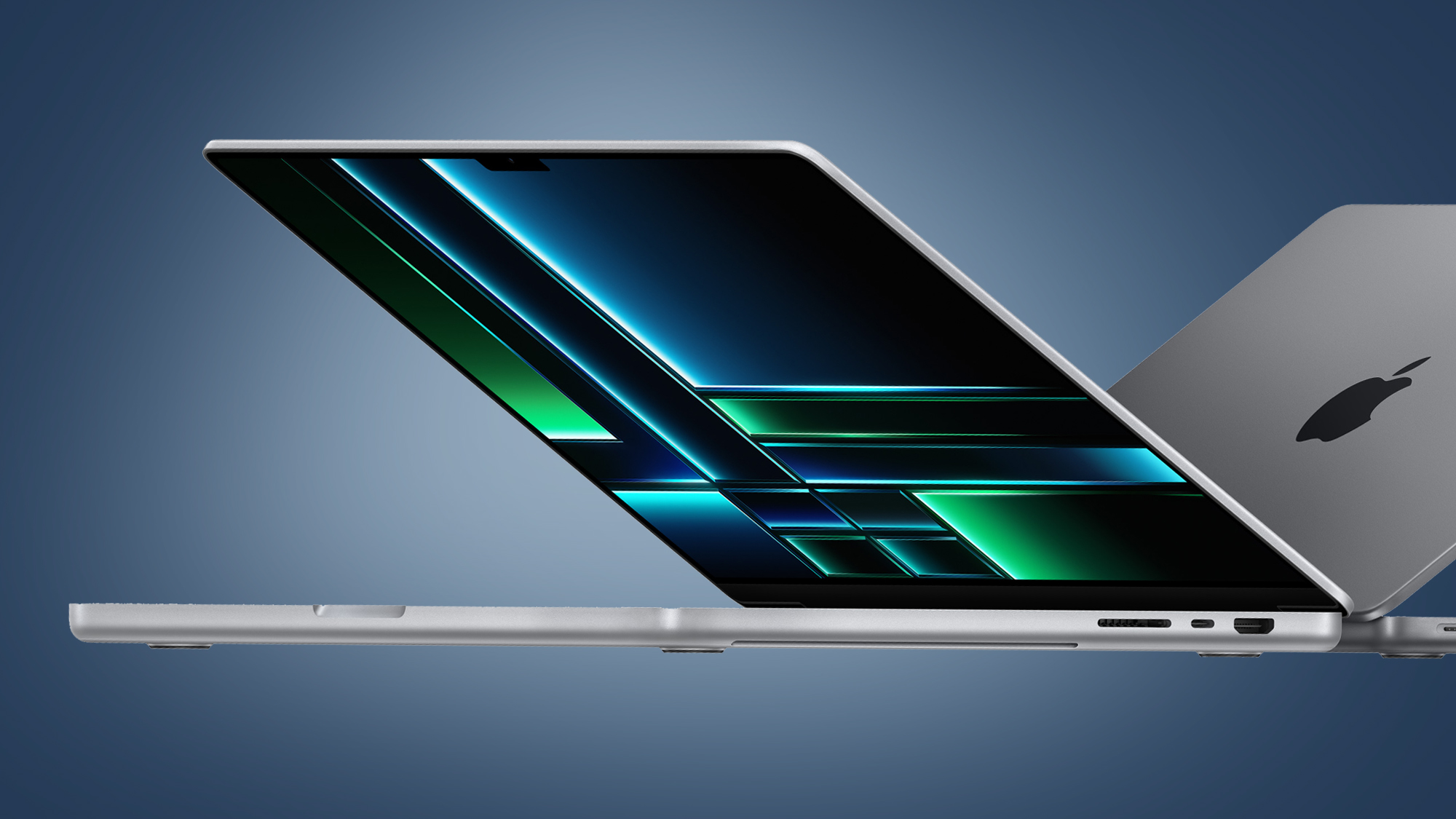
The Apple MacBook Pro M2 laptop on a blue background

(Image credit: Apple)

MacBook Pro 16-inch (2023) and MacBook Pro 14-inch (2023)

The MacBook Pro 14-inch (2021) and MacBook Pro 16-inch (2021) now have follow-ups, with both models of the powerful mobile workstations getting the new M2 Pro and M2 Max chips - which Apple calls "the world’s most powerful and efficient chip for a pro laptop."

While we'll hopefully put these claims to the test soon when we get the new MacBook Pros in for review, we were extremely impressed by the previous versions, and loved the MacBook Air (M2, 2022) and MacBook Pro (M2, 2022), so we can definitely imagine that these new models won't disappoint.

Apple also has big claims for battery life, with up to 22 hours - again, this is potentially game-changing if true, considering the performance levels on offer here.

These new MacBook Pros also support Wi-Fi 6E and HDMI support up to 8K. You can also configure the MacBook Pros with a huge 96GB of unified memory.

The 14-inch MacBook Pro with M2 Pro chip starts at $1,999 and comes with:

  • 10-core CPU with 6 performance cores and 4 efficiency cores
  • 16-core GPU
  • 16-core Neural Engine
  • 200GB/s memory bandwidth
  • 16GB unified memory
  • 512GB SSD

For $2,400, you get an 14-inch MacBook Pro with M2 Pro chip and:

  • 12-core CPU with 8 performance cores and 4 efficiency cores
  • 19-core GPU
  • 16-core Neural Engine
  • 200GB/s memory bandwidth
  • 16GB unified memory
  • 1TB SSD

If you need more power, the 14-inch MacBook Pro with the M2 Max chip costs a rather huge $3,099, and comes with:

  • 12-core CPU with 8 performance cores and 4 efficiency cores
  • 30-core GPU
  • 16-core Neural Engine
  • 400GB/s memory bandwidth
  • 32GB unified memory
  • 1TB SSD

Each one has a 14.2-inch Liquid Retina XDR display with a 3,024 x 1,964 resolution screen and 154 pixels per inch.

These are the same as the previous models, but as they were the best screens you can get on a laptop, we're not complaining!


from TechRadar - All the latest technology news https://ift.tt/XscoC3A
via IFTTT

Apple unveils M2 Pro and M2 Max: next-generation chips for next-level workflows

Supercharging MacBook Pro and Mac mini, M2 Pro and M2 Max feature a more powerful CPU and GPU, up to 96GB of unified memory, and power efficiency.

New Apple MacBook Pros with M2 Pro and Max chips could be revealed today

Apple could be planning to launch new MacBook Pro models with M2 Pro and M2 Max chips later today, if a pair of fresh rumors line up as some are theorizing.

The first leak, as MacRumors reports, is a filing that has been spotted in a Canadian database (Industry Canada Radio Equipment List), pertaining to an inbound MacBook Pro and its Wi-Fi 6E support (as flagged by Wade Penner on Twitter).

See more

This isn’t a source we’re familiar with, but MacRumors has dug into this and confirms that the filing exists (but we should still obviously add a whole heap of seasoning to any leak).

The second part of this is that there has been separate chatter on the grapevine – from well-known Apple leaker Jon Prosser, and other sources including MacRumors again – that Apple has a product reveal planned for later today.

Now, we don’t know what that product might be – all we’re told is that it’ll be a simple press release announcement via the Apple newsroom (as opposed to any kind of launch event).

Put this leak and rumor combination together and we get the theory that this launch, if it does indeed happen later today, could well be the MacBook Pros.


Analysis: If we do see MacBook Pros, they might be underwhelming…

It’s been long rumored that there’ll be MacBook Pro 14-inch and 16-inch models coming out in 2023 (actually, they were first expected to debut late in 2022). However, the latest speculation we’ve heard (previous to this current rumor) is that these MacBook Pros won’t arrive early in 2023 as expected, and may be pushed to Q2.

That’s not certain, by any means – none of this is, of course – but all the previous chatter points to MacBook Pros not turning up anytime soon, and certainly not immediately.

A sighting of a filing doesn’t necessarily mean anything is imminent, either. Then again, it’s a fair old clue that we don’t have that long to wait; and maybe Apple is planning a reveal now, but the on-sale date may be pushed some way down the line.

We’re not hugely convinced about that, though, and we could well see another product revealed today. For example, a new Mac mini is another widely anticipated candidate for being unleashed.

If we do see the MacBook Pro 14-inch and 16-inch introduced to the world via press releases, this would underline another thread that has been presented by the rumor mill of late – namely that there are hardly any changes to the laptops. Mark Gurman, another heavyweight Apple leaker, recently asserted that these portables would keep the exact same design and features as existing models, with the only real upgrade being the M2 Pro and Max chips – and that any performance increase will likely be ‘marginal’, not a word that’ll get anyone excited.

So, if that is indeed the case, then a low-key launch using press releases would make sense. How this one will pan out, then, is a tough one to call, with arguments for and against a MacBook Pro appearance. But we don’t have long to wait to find out if an announcement really is forthcoming today, and if so, what it’ll be. All eyes are on the Apple newsroom.


from TechRadar - All the latest technology news https://ift.tt/4dM8i9q
via IFTTT

Monday, January 16, 2023

Taliban start buying blue ticks on Twitter

Prominent officials have bought ticks which used to indicate notable accounts verified by Twitter.

source https://www.bbc.co.uk/news/world-asia-64294613?at_medium=RSS&at_campaign=KARANGA

Laptops with Nvidia RTX 4090 through to 4050 GPUs are about to go on sale

Nvidia’s Lovelace laptop GPUs are inbound and we already knew portables carrying these RTX 4000 graphics cards would debut in February, but now we’ve heard exactly when the various cards should be emerging next month.

This is according to Chinese tech site IT Home (flagged up by Wccftech, via VideoCardz), and as ever, we must be skeptical around rumors, but the contention is that Nvidia will first launch RTX 4090 and 4080 models on February 8.

That’s when these laptops will start shipping, but you’ll actually be able to order the machines on February 1, a week in advance, the report asserts.

Laptops which run with the RTX 4070, 4060 and 4050 GPUs will be available later in the month, going on sale February 22.

Pricing for the lower-tier RTX 40 laptops released later in the month starts from $999 (around £820, AU$1,430), with price tags for the RTX 4080 and 4090 portables starting from $1,999 (around £1,640, AU$2,620).

We’ve already seen that the notebooks carrying the Lovelace flagship will be seriously pricey, with the cost of an upgrade to the RTX 4090 being shown by XMG. It adds an eye-watering €1,687 (around $1,830, £1,500, AU$2,630) to the price tag of XMG’s Neo 16 gaming laptop (and that’s just the additional cost for upgrading the GPU, not the total price).


Analysis: A swift launch for the Lovelace laptop range

If this proves correct, in just a touch over two weeks’ time, you’ll be able to pre-order a laptop with an RTX 4090 or 4080. And before the end of February, all Lovelace mobile graphics cards will be out there in notebooks on the market – so Nvidia isn’t hanging around deploying the entire range for laptops.

This feels especially pertinent when you consider that in the desktop sphere, only the RTX 4090, 4080, and 4070 Ti have been released so far – and those releases were staggered over quite some time (the 4070 Ti has only just got here).

Whether this push with deploying laptop GPUs swiftly means we might see the RTX 4070 or RTX 4060 (or even 4050) for desktop PCs anytime in the near future, well, we wouldn’t bank on it – certainly not in the latter two cases anyway. All recent rumors have suggested the desktop RTX 4060 is still quite some way off, and its release may not even be considered by Nvidia until enough lower-tier RTX 3000 stock – which is still hanging around – has been sold off.

As we mentioned above, the cost of the laptop RTX 4090 is not for the faint-hearted. Indeed, it’s actually every bit as pricey as the desktop RTX 4090, while delivering performance in line with the desktop 4080. (Remember that the mobile 4090 is built on the AD103 chip and has a considerably chopped CUDA Core count of 9,728 compared to AD102 on the desktop 4090, which offers 16,384).


from TechRadar - All the latest technology news https://ift.tt/ardt0U8
via IFTTT

Sunday, January 15, 2023

Saturday, January 14, 2023

Microsoft Edge could go for rounded corners in a big way – but that might not be popular

Microsoft’s Edge browser could be going big on rounded corners with a fresh potential change spotted in (limited) testing right now.

Neowin reports that XenoPanther highlighted the possible change on Twitter, with a screenshot showing Edge Canary (the earliest testing version) featuring rounded corners for the actual area of the browser showing the web page.

See more

Even the sidebar to scroll down the web page is rounded at the top and bottom, and this is very definitely a look that isn’t to everyone’s taste (we’ll come back to that in a moment).

Note that as XenoPanther observes, there are other Edge testers out there – some of whom chime in on the above Twitter thread – saying that they don’t see this change.

So it would appear to be a tweak that’s only been rolled out to a small amount of testers (so-called A/B testing), and depending on how things go, it may then be pushed out to more folks (still in testing, mind – to gauge further reaction from a larger userbase).


Analysis: Consistency first – but is this going too far?

There are some people who really aren’t keen on the new rounded look for the central area where the web page is displayed in Edge. And the additional catch here is that the rounding isn’t just present when the browser is displayed in a window, but also when it’s made full-screen.

The latter does look rather odd, we must agree, and off-putting when engaging in displaying full-screen video for example – also losing you a little bit of screen real-estate for showing the video clip.

As one user put it to Microsoft on Twitter (expletive has been removed): “Stop giving everything round corners!”

We get it, though – having adopted the round rather than sharp edge as an overall look for Windows 11, Microsoft is just keeping consistent. However, this feels like a step too far, maybe, particularly the full-screen aspect of the rounding; but this is still early testing, and doubtless the idea will be refined yet (or indeed ditched based on feedback, perhaps).


January 14, 2023 at 11:55AM from TechRadar - All the latest technology news https://ift.tt/xbnNmof
via IFTTT

Friday, January 13, 2023

Tesla cuts prices by up to a fifth to boost demand

The electric car maker is reducing prices by thousands of pounds as global downturn threatens sales.

source https://www.bbc.co.uk/news/business-64266471?at_medium=RSS&at_campaign=KARANGA

Thursday, January 12, 2023

Ignore the haters, Apple – I’d love a touchscreen MacBook

Steve Jobs may have hated the idea of a touchscreen MacBook, but it looks like Apple may finally be warming to the idea, and if true, I think this is a great move.

A new report from Bloomberg suggests that Apple engineers are working on a project to finally bring touchscreens to Macs – possibly to a MacBook Pro sporting a new OLED display in either 2024 and 2025. 

Now, before I (or you) get too excited, this is all rumor at this point, and no release date is even mentioned in the report, suggesting that even if Apple is working on touchscreen MacBooks, it may still not have made its mind up on them ever seeing the light of day. The whole project could be scrapped if Apple thinks it won’t work (as it did in the past).

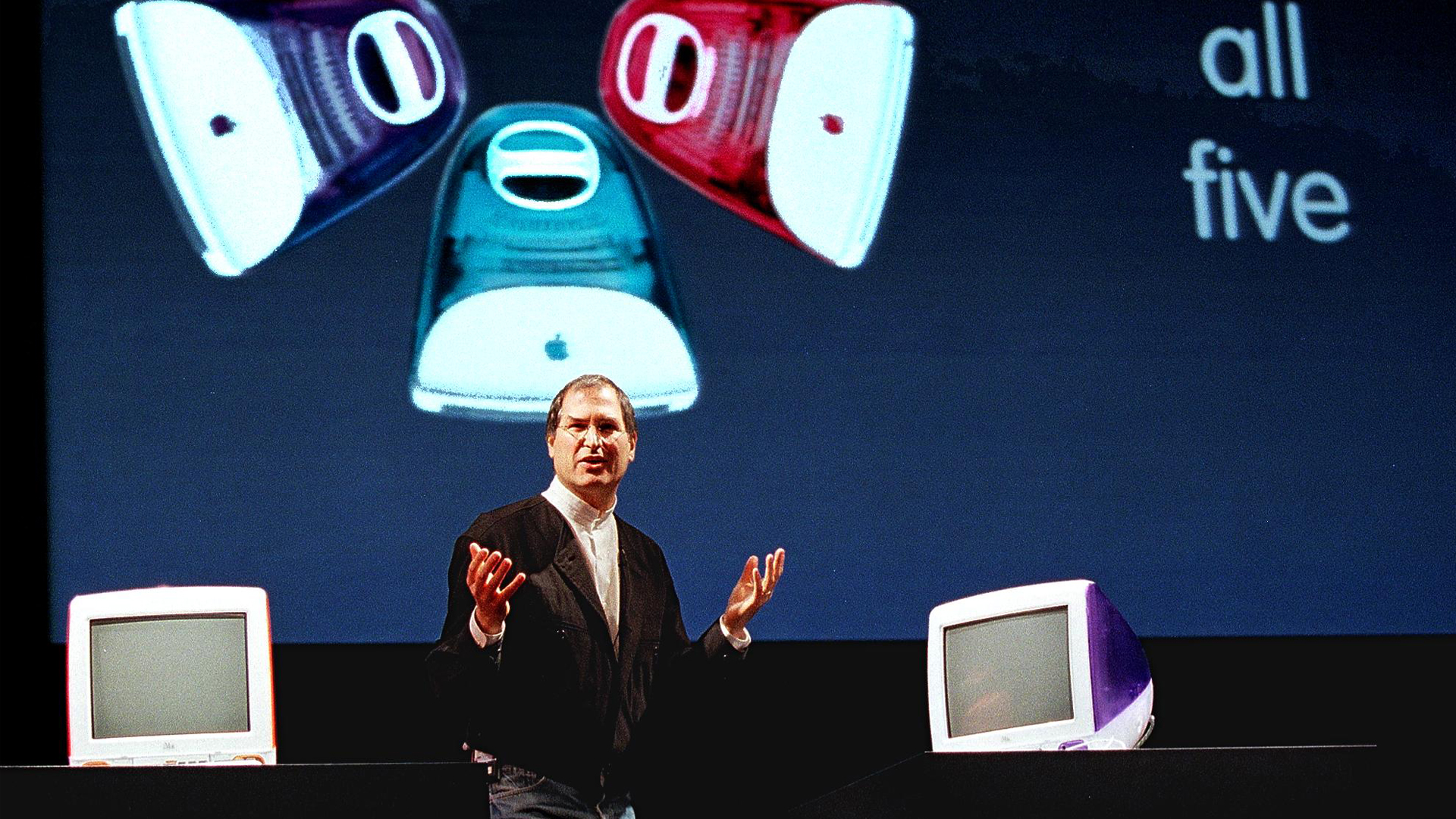
Now, there will be people out there who agree with Steve Jobs' earlier dismissal of touchscreen laptops, even after all this time. After all, who knew MacBooks better than Jobs, once-CEO of Apple?

While I won’t suggest I do, I do think he was wrong about this, and adding touchscreens would be great for the next generation of MacBooks.

Steve Jobs unveils the iMac in 1998

(Image credit: Getty Images)

Do I really disagree with Steve Jobs over MacBooks?

Back in 2010, Steve Jobs called touchscreen laptops an “ergonomically terrible” idea, because “Touch surfaces don’t want to be vertical.”

The first thing to point out is that this was now 13 years ago. Back then, touchscreen laptops were in their infancy, offering far less responsive touch experiences, along with operating systems and applications that just weren’t designed for touchscreens.

In 2023, things are very different. Almost every major laptop maker (apart from Apple) sells touchscreen laptops, including Dell, HP and even Microsoft. Many touchscreen laptops are stylish and premium devices, with thin and light designs and screens that show you no longer have to sacrifice image quality if you go for a touchscreen.

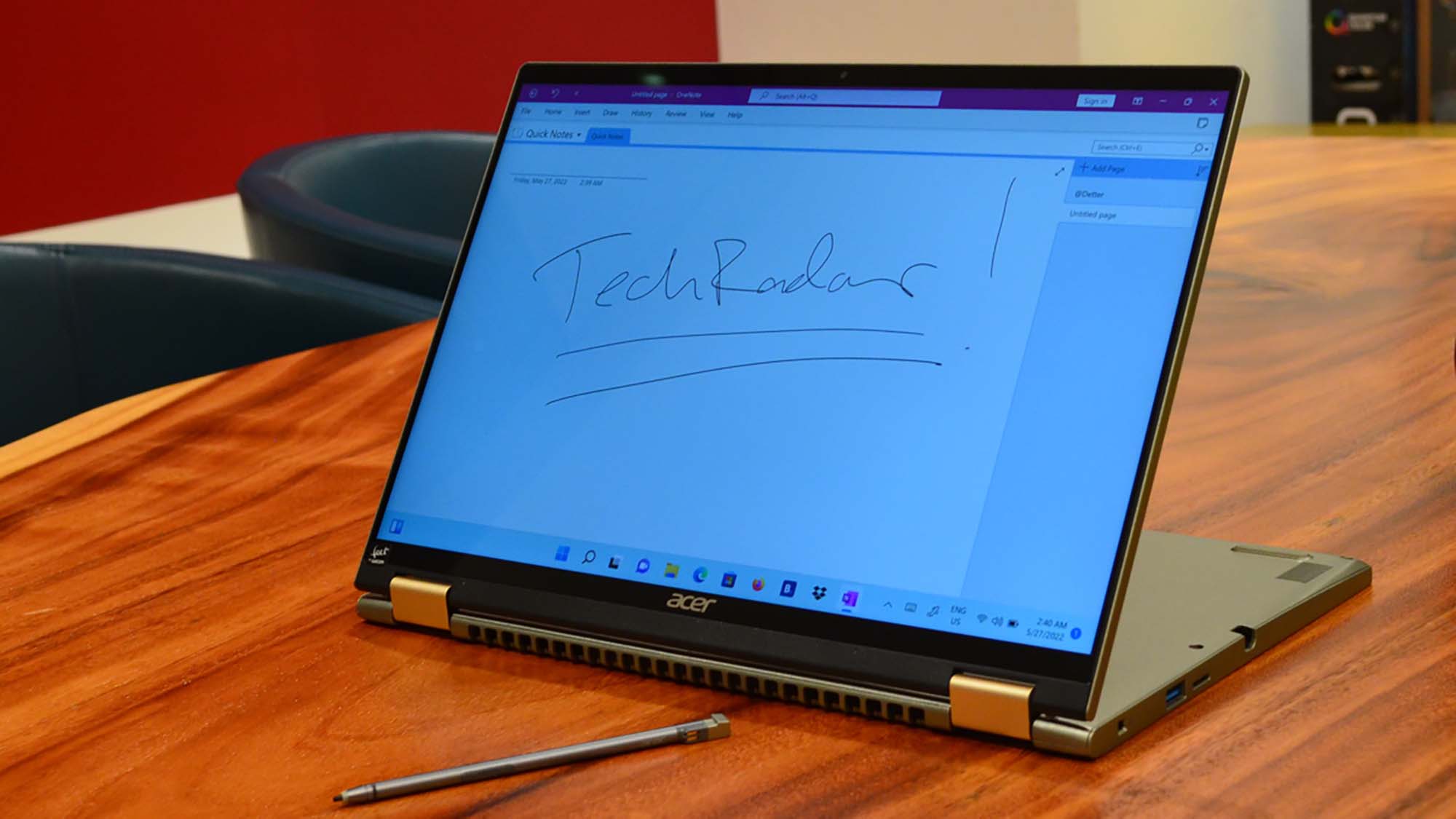
An Acer Spin 5 (2022) on a wood grain table

(Image credit: Future)

Operating systems have also evolved to better support touchscreens. While the less said about Microsoft’s earlier attempts to make a touchscreen-friendly operating system (cough Windows 8 cough) the better, Windows 10 and Windows 11 have elements of their user interface that is designed for touchscreens, including a tablet-mode.

There are also a number of Chromebooks that come with touchscreens, and again, Chrome OS has design elements that make using it with a touchscreen easy and comfortable. Chromebooks also prove that touchscreens are no longer confined to expensive devices.

However, the main issue I had with Jobs’ idea of touchscreen laptops – at least when he was quoted in 2010 – is how he envisioned touchscreen laptops being used. With the mention of verticality, he obviously had traditional laptops in mind. 

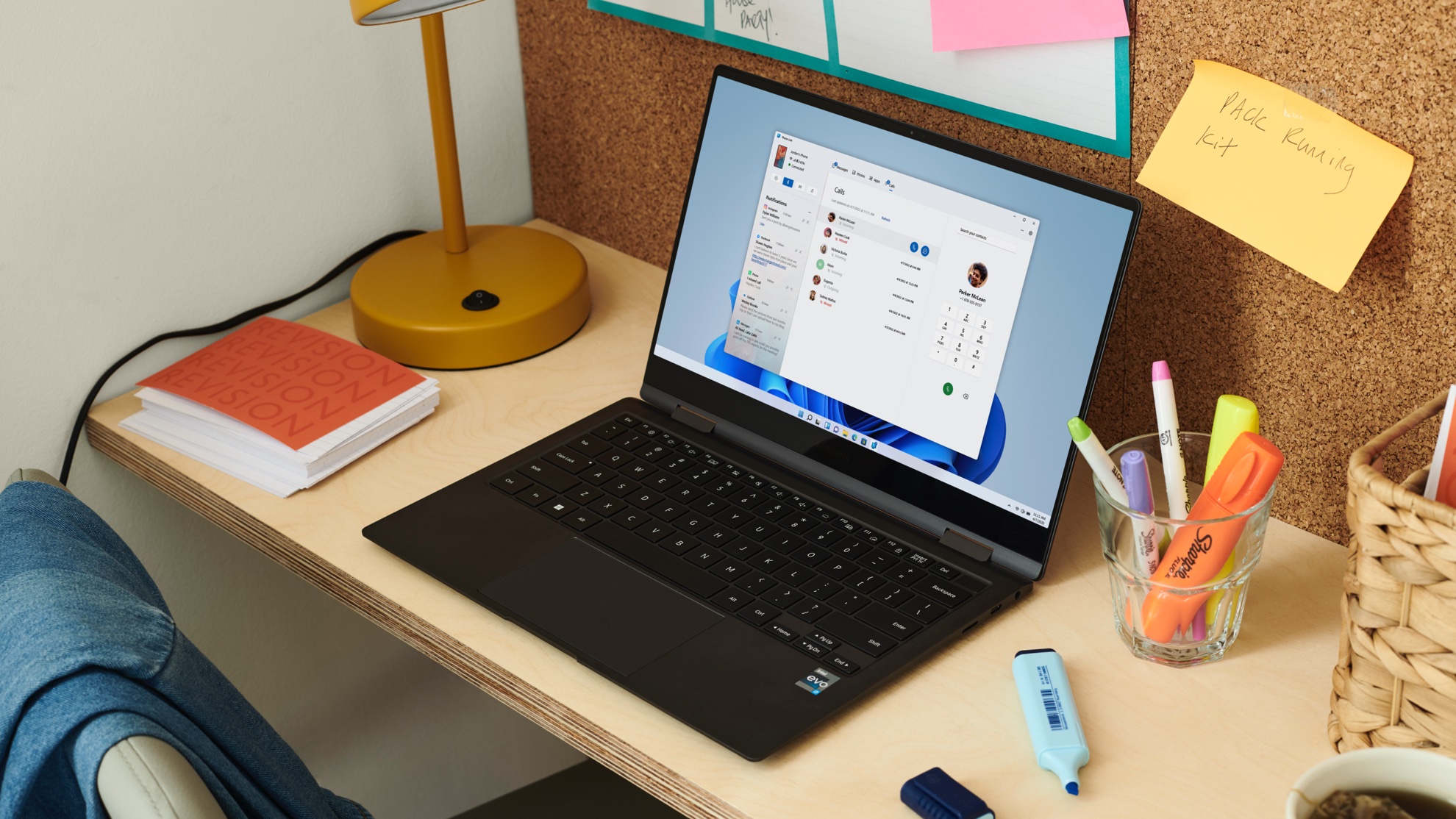
However, there’s now a huge range of 2-in-1 laptops which allow you to flip the screen back behind the keyboard, or remove the keyboard all together, and which can be used more like tablet devices. They can also be rested on laptops or desks, so verticality is not an issue.

Samsung Galaxy Book folded on table

(Image credit: Future)

I also think Jobs misunderstood how people would want to use touchscreen laptops, saying that “After an extended period of time, your arm wants to fall off.” This leads me to believe that he thought people would be using the touchscreen of a traditional laptop for all interactions, such as selecting text, opening apps and typing. Of course, if you did all that while leaning over a laptop keyboard and prodding the screen, your arm would get tired.

However, that’s not how people use touchscreen laptops. I certainly don’t. Instead, I find the touchscreen is best used as a supplementary way of interacting with the laptop. For example, I could be typing away in Microsoft Word on the physical laptop keyboard, then quickly flick my finger up or down the screen to scroll through the document. It can also be handy for quickly moving windows – by dragging an open application with my finger to the side of the screen will automatically organise the screen to the application takes up that half of the display. You can do it with a mouse, but with a touchscreen, it feels even more intuitive and easy.

With young people now becoming accustomed to using touchscreen devices from an early age, offering touch capabilities is even more important than before. A device without one can quickly seem archaic, and with Apple’s biggest rivals offering touchscreen laptops, there could be a danger that it begins to look (excuse the pun) out of touch.

This isn’t to say Jobs didn’t have a point, nor was he completely wrong. He was quoted over a decade ago, and is sadly no longer around to update or change his opinion on touchscreen laptops as the technology evolved.

So, it’s encouraging to hear rumours that Apple may be revisiting the idea of touchscreen MacBooks. Its powerful range of iPad Pros, which run the same M1 and M2 hardware as current MacBooks, are often pared with Bluetooth keyboards, turning them into laptop-like devices with… touchscreens.

MacBook Pro Touch Bar

(Image credit: Apple)

With iPadOS and iOS, Apple already has software designed for touchscreens, so I do think MacBooks with touchscreens will one day appear – rather than a half-baked approach like putting a thin Touch Bar above the keyboard, which would do some of the things a touchscreen would do… but worse.

So, come on, Apple. Ignore the haters and give me a touchscreen MacBook!


from TechRadar - All the latest technology news https://ift.tt/e5kAu7s
via IFTTT

Wednesday, January 11, 2023

UK Twitter employees legal threat over redundancies

A legal letter seen by BBC News calls workers' treatment "unlawful, unfair and completely unacceptable".

source https://www.bbc.co.uk/news/technology-64225278?at_medium=RSS&at_campaign=KARANGA

UK investor reported losing £1m in FTX collapse

Twelve others also reported losses in the failed exchange to a City of London Police scam hotline in November.

source https://www.bbc.co.uk/news/technology-64225276?at_medium=RSS&at_campaign=KARANGA

Introducing Apple Business Connect

Apple Business Connect is a free tool that allows businesses to customize the way information appears across Apple Maps, Messages, and other apps.

Flying boats and other tech for cleaner shipping

The shipping industry is experimenting with foils, sails and fuel to make itself less carbon intensive.

source https://www.bbc.co.uk/news/business-63700540?at_medium=RSS&at_campaign=KARANGA

Tuesday, January 10, 2023

Apple and Major League Soccer unveil broadcasters for MLS Season Pass

Apple and Major League Soccer announced the initial members of the accomplished team of announcers for MLS Season Pass.

Nvidia RTX 4090 laptop GPU price revealed – and it’s seriously expensive

Nvidia’s RTX 4090 laptop GPU was revealed at CES 2023, but if you want this power-packed graphics card, how much will it cost you? The unsurprising answer is a small fortune, going by the price of an upgrade to the RTX 4090 on an XMG gaming laptop.

VideoCardz spotted that in a YouTube video from Jarrod’sTech, pricing is listed for the various RTX 40 Series graphics card options that buyers can choose from when purchasing XMG’s Neo 16, an incoming gaming portable packing Intel’s Core i9-13900HX Raptor Lake CPU (and a whole load of other high-end goodies).

The base model of the Neo 16 comes with the RTX 4060, retailing at €2,199 (around $2,360, £1,940, AU$3,420). If you want to upgrade that to the RTX 4090, the cost is a whopping €1,687 (around $1,810, £1,490, AU$2,630).

XMG’s prices for other Nvidia Lovelace GPUs come to a relatively palatable €375 (around $400, £330, AU$580) for the RTX 4070, but then the RTX 4080 is pitched at €1,050 (around $1,130, £930, AU$1,640).

The Neo 16, and other RTX 40 Series laptops, will be out in February.


Analysis: Pushing the boundaries of pricing (again)

Nvidia’s newly revealed GPUs are pricey, you say? Well, who’d have believed it…

Of course, the fact that the RTX 4090 is expensive in its laptop incarnation is hardly a shock, and again looking at the desktop pricing, the RTX 4080 also being a big financial ask is similarly predictable.

If we consider the total cost of the RTX 4090 going by XMG’s pricing, the cost of the upgrade is almost €1,700 as mentioned, but for the total theoretical price, we must also consider that you’re already paying for the RTX 4060 in the entry-level model’s price tag – so we can bung that on top.

Meaning that the RTX 4090 laptop GPU must come close to two grand in Euros, and that’s about the asking price for the a desktop RTX 4090 (at major German retailer MindFactory, at the time of writing). So, one way to look at this is the laptop version of this GPU is just as expensive as the desktop incarnation’s eye-watering price tag.

And of course, the laptop take on the Lovelace flagship isn’t nearly as performant as the desktop card – it draws a lot less wattage, of course, at 150W TGP (plus a 25W dynamic boost) – but what you’re paying for here is the ability to fit as much power as possible into a relatively small case (a laptop chassis).

Still, the question remains – do you really want to fork out that much for a notebook graphics card? One that has the same CUDA Core count as the RTX 4080 desktop, and likely similar performance to that card (in a best-case scenario, it’s perhaps a bit slower in the main). You can bet there are folks out there already reaching for their wallets, though…


from TechRadar - All the latest technology news https://ift.tt/iWHSQLC
via IFTTT

Monday, January 9, 2023

Sunday, January 8, 2023

Apple MacBook Pro laptops for 2023 could be disappointing

The rumor mill is spinning once more concerning Apple, and this time we’ve heard spillage on the topic of what Macs will be coming out in 2023 – and to prepare for some disappointments.

This all comes from a renowned source on all things Apple, Mark Gurman. In his latest Bloomberg newsletter he touches on what’s next in terms of MacBooks, the Mac Pro, and the iMac (or what isn’t next – at least not this year – in the latter case, as you’ll see). As ever, treat rumors with plenty of caution, even those from more reliable sources.

According to Gurman, we will see new MacBook Pros in the first half of 2023, but they will have exactly the same design and features as the existing 14-inch and 16-inch models, with the only real upgrade being the inclusion of M2 Pro and M2 Max chips. However, even on that front, the performance boost will be “marginal” Gurman asserts.

What could be more exciting is Apple’s apparent plans for a MacBook Air 15-inch laptop, which could be the “saving grace” for the entire Mac range this year, though Gurman doesn’t say what it’ll pack. He also tells us that a previously rumored MacBook 12-inch isn’t coming, or at least it isn’t on the roadmap for the near future.

There will be a new Mac Pro for 2023, but that also disappoints in some respects. Gurman believes that a high-end Mac Pro spin, with a 48-core CPU (toting 152-cores for graphics) has been canceled, and Apple is instead simply pushing out a model with the M2 Ultra chip. That throws some question marks over how it’ll compare to the Mac Studio in terms of value, Gurman notes, and the new Mac Pro will supposedly look the same as the 2019 version, too.

There’s further disappointment in an apparent change that means the system RAM won’t be upgradable by the user, because the memory will be soldered directly onto the motherboard.

To round off the rather lackluster state of affairs, a larger iMac Pro which has been mulled by Apple as a possibility – popping on and off the product roadmap, according to Gurman – now looks unlikely to appear. Gurman observes: “I would be surprised at this point if it arrives in 2023.”

As for a revamped iMac 24-inch, that won’t go ahead until the M3 SoC is ready apparently, so that’s likely to be 2024 or perhaps at the end of this year.


Analysis: A rather bleak but not unexpected rumor dump

If all this makes for somewhat bleak reading – which it does in the main – then we must remember that this is just informed speculation, and Gurman could be wrong on some (or many) counts. Even if he’s right, what Apple is thinking now may change going forward.

At any rate, assuming the above rumors are correct, it’s no real surprise to hear the MacBook Pros won’t be much of a change from the current incarnations. Although the way Gurman couches the step up in performance from current models as “marginal” doesn’t exactly spark excitement.

We were expecting those refreshes to arrive late in 2022, if you recall, and when it became clear that wasn’t happening, the rumored launch timeframe became Q1 of 2023. Now, Gurman is saying the first half of the year, which seems to indicate that a first quarter release may not happen – another slight disappointment.

We didn’t see the Apple silicon-powered Mac Pro at CES 2023, as we hoped to do, and perhaps we now know why – things are still up in the air with the machine, maybe. However the Mac Pro turns out, presumably Apple must make it fit and seem like a sensible proposition within its own line-up – though the mention of a possible step back in terms of non-upgradable RAM is an unwelcome thought. With a pricey PC like this, restrictions on component upgrades are a frustration to say the least.

Still, we do have that MacBook Air 15-inch still potentially inbound for 2023, which could make up for much of the rest of the Mac range hitting the shelves this year being light on differences compared to existing models, or underwhelming in other respects. A bigger MacBook Air has long been rumored, and never actually appeared, but perhaps now is the time – there are certainly some big fans of the idea of a 15-inch version of the laptop (and equally, some folks who are more cautious about it).

Via Apple Insider


from TechRadar - All the latest technology news https://ift.tt/UVj8Go6
via IFTTT

Eyes on with Vuzix Ultralite: affordable (and amazing!) AR glasses for everyone

 “Nobody wants to look like the guy who just stepped off the Starship Enterprise,” Paul Travers, the president of AR eyewear maker Vuzix tells me. 

He’s being polite here, so I’ll say what he won’t: It’s hard to wear current VR and AR headsets for more than an hour. They’re heavy! Microsoft’s Hololens is really neat, but at a pound and a half, it’s a lot of headgear to wear around. And Magic Leap is cool, sure, but they look odd when you’re wearing them.

Vuzix has the answer. At CES 2023, the company unveiled new Ultralite AR glasses, ordinary-looking plastic frames with a tiny projector tucked in one stem and a tiny battery and Bluetooth radio in the other. Combine that with Vuzix’s waveguides – a layer in the glasses that bends the projector’s light into your line of sight – and you’ve got ordinary-looking glasses that do the extraordinary.

Jeremy Kaplan wears Vuzix lenses

The author wearing sunglasses enhanced by Vuzix Ultralite technology -- proof that AR glasses clan look like ordinary glasses and still do the extraordinary. (Image credit: Jeremy Kaplan / Future)

I put on the Vuzix Ultralite, and saw in the corner of the right lens a line of green text, the sort you’d see on old mainframe computers in the movie War Games. It was sharp, perfectly readable, and bright as day. It was a real-time transcription of what another Vuzix staffer was saying; the device is equally adept at displaying directions, with arrows to indicate where you should travel, workout status, text messages, and so on.

This is not, to be clear, 30 fps full-color video. That technology also exists, from an Israeli company called Lumus. But it’s at least two years out, the company told me, and due to costs, when it arrives it’s likely to show up in a monocular application. (Meaning a single lens of your glasses, although if you’re into monocles, I suppose they could make one.)

But the Vuzix Ultralite is here today, and it is exactly what I’ve been looking for. It doesn’t have a massive battery pack (or a cord to a battery you shove in your pocket) because it works directly with your phone, thanks to a simple Bluetooth connection. It’s not passing a great deal of video across that connection, so there’s no need for that cable either. It’s just a pair of ordinary-looking glasses that tap into the power of your phone.

The tiny components that make Vuzix Ultralites work

A tiny battery and a tiny projector are all that Vuzix Ultralites require -- beyond the waveguide on the lens, of course. (Image credit: Jeremy Kaplan / Future)

“This phone has amazing capabilities,” Travers points out. Why try to recreate that? “For instance, speech-language translation. You could be speaking French and I’ve got the glasses on and it’s all in English in the lenses.” Stick a microphone in the lenses and you can completely interact with your phone as well.

“We’ve been at this for 26 years,” Travers told me. His company has been doing waveguides forever and manufacturing them here in the United States at a facility in Rochester, New York. “Back in the day, the Special Forces guys asked us, ‘Can you make Oakley-style sunglasses with computers in them?’ Because we want that and we call it the Oakley Gaze. Half the U.S. military would buy these things if you could do that … So that’s been a focus for us.”

The US government recently gave Microsoft a half-billion-dollar contract for Hololens. Meanwhile, this exists. Perhaps the government should have held out?

Check out all of TechRadar's CES 2023 coverage. We're bringing you all the breaking tech news and launches, everything from 8K TVs and foldable displays to new phones, laptops and smart home gadgets.


from TechRadar - All the latest technology news https://ift.tt/GzqLO5D
via IFTTT