Microsoft Edge is going to make an effort to help you improve the browser with a new system of badges for add-ons.
Add-ons (also referred to as extensions) are little extras that can be bolted onto the browser to deliver all kinds of functionality, but clearly the trick to making Edge better with them is choosing good add-ons, and not bloat or poor-quality efforts (or even malicious ones in a worst-case scenario).
As MS Power User reports, what the new system delivers is a badge – a visual icon, present on the product description page and elsewhere – to show that any given browser extension is of a high enough quality to deserve that label. So in short, you know you’re getting something you can trust, and that will work well.
Microsoft says that it’ll soon start to experiment with testing extension badges in the Edge Addons Store (EAS). The company notes: “Edge is starting with a small-scale experiment and will begin to engage with the developer community to talk through the criterion and help them get acquainted with the badging process on EAS.”
Analysis: Another step in the right direction
Badges will also act as a carrot for devs to make better extensions, too. As Microsoft explains, developers will be encouraged to follow best practice guidelines when putting together their add-ons in order to try to qualify for a badge that’ll ensure their products are more likely to be used by Edge fans. So, it’s more likely that the extensions being made will be of a higher quality, broadly speaking, or at least that’s the hope.
There are quite a number of add-ons in the library available to Edge users at this point, so helping to sort the wheat from the chaff is definitely a good idea. According to Microsoft, there are almost 11,000 extensions for Edge at this point, and that’ll keep on growing, naturally.
It’s good to see the software giant taking more positive steps to try and improve Edge as a product. We’ve also glimpsed another innovative step in recent times, namely the integrated free VPN that’s been in testing (and has supposedly just reached release, at least for some Edge users).
All this is refreshing, primarily because advancing Edge with extra capabilities and fresh features is what we want to see, not experimenting with how more adverts can be jammed into Windows 11 to push Edge (let’s stop with that already, Microsoft, please).
February 28, 2023 at 05:03PM from TechRadar - All the latest technology news https://ift.tt/561cY9K
via IFTTT
By far one of the coolest laptops on show at MWC 2023 in Barcelona right now has to be Lenovo’s ‘rollable technology’ concept unit. As a helpful Lenovo rep informed me, it’s nowhere close to being a marketable product right now - and if I was the person in charge of this particular product, I’d quit while I was ahead.
For starters, I’m going to object to the terminology used here. While the display certainly can be ‘rolled’ to reduce its size, the idea of a ‘rollable’ laptop immediately puts me - and, I would imagine, a lot of people - in mind of a whole device that can be rolled up to make it more compact when not in use. Imagine being able to roll one of the best laptops - or the best phones, since Lenovo also included a compact version of the display - into a nice thin tube to slip into a bag or pocket!
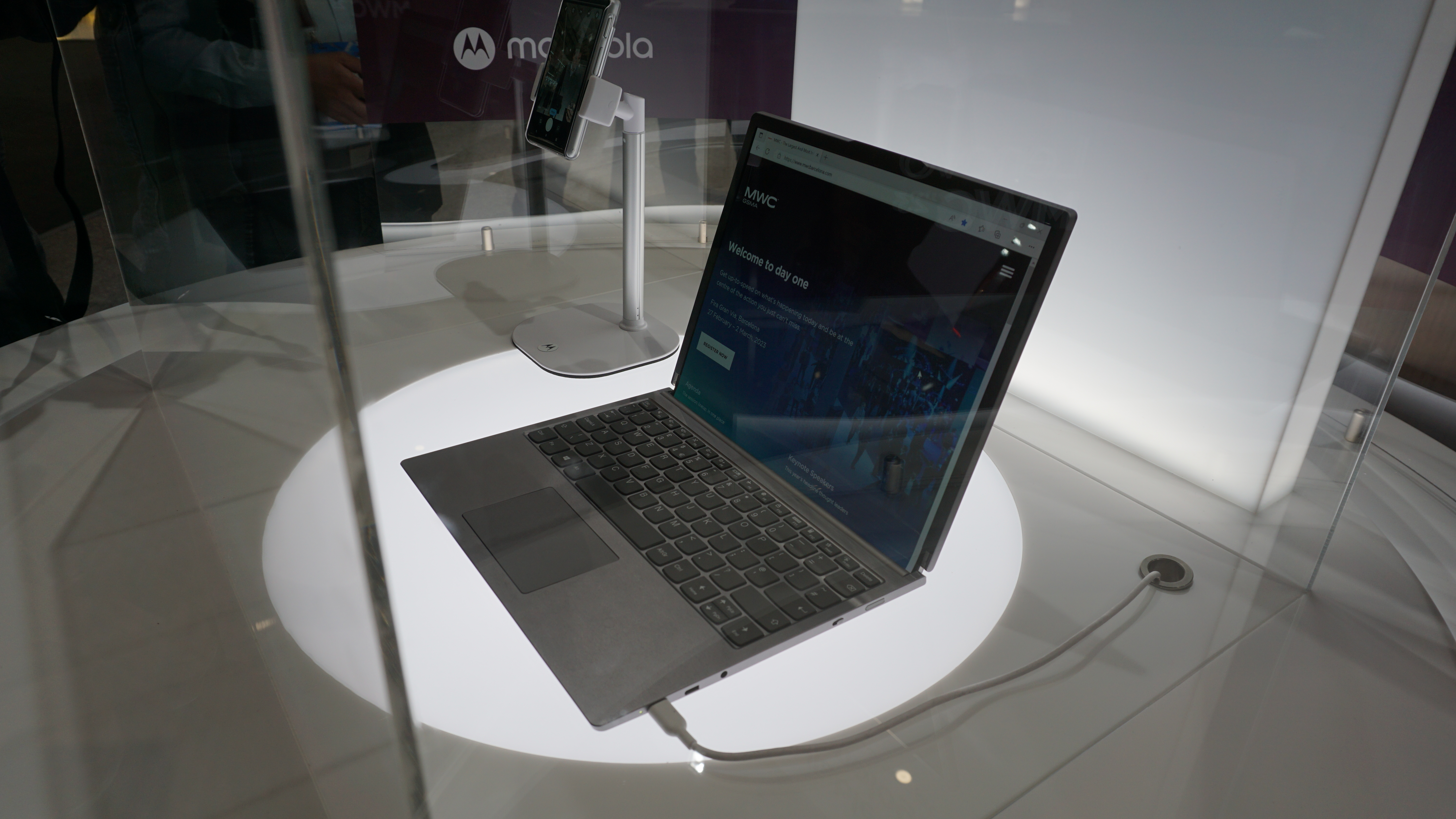
That, sadly, is not what this concept product does. Instead, it features a roll of unused display hidden inside the hinge and a small motor housed within the display casing that can unspool this section of screen to enlarge the whole display. Naturally, this only expands the screen vertically, giving the visual impression that the panel is sliding upwards to reveal more screen space underneath.
It’s certainly an incredible feat of technological engineering, and I can only congratulate Lenovo for making it happen. I think ‘scrollable’ or ‘spoolable’ (is that a real word?) might’ve been a clearer term, though - and that’s not the only problem this new frontier of display tech has.
The concept laptop already has a fairly tall screen even before the additional display space is unfurled from the base.(Image credit: Future)
Needs vs desires
“Your scientists were so preoccupied with whether they could, they didn’t stop to think if they should.” So said Jeff Goldblum (in full leather-clad heartthrob mode) in Jurassic Park, and I think that quote applies here. This is some fantastic technology, but does anyone really need it?
Much like the foldable laptops we’ve seen in recent months, such as the Asus Zenbook 17 Fold OLED, this feels like an exercise in innovation for innovation’s sake. Perhaps that’s cynical of me, but these sorts of products are prohibitively expensive once they make it into full production, and the average consumer simply doesn’t need (or even necessarily want) a laptop that can swap between two different screen sizes.
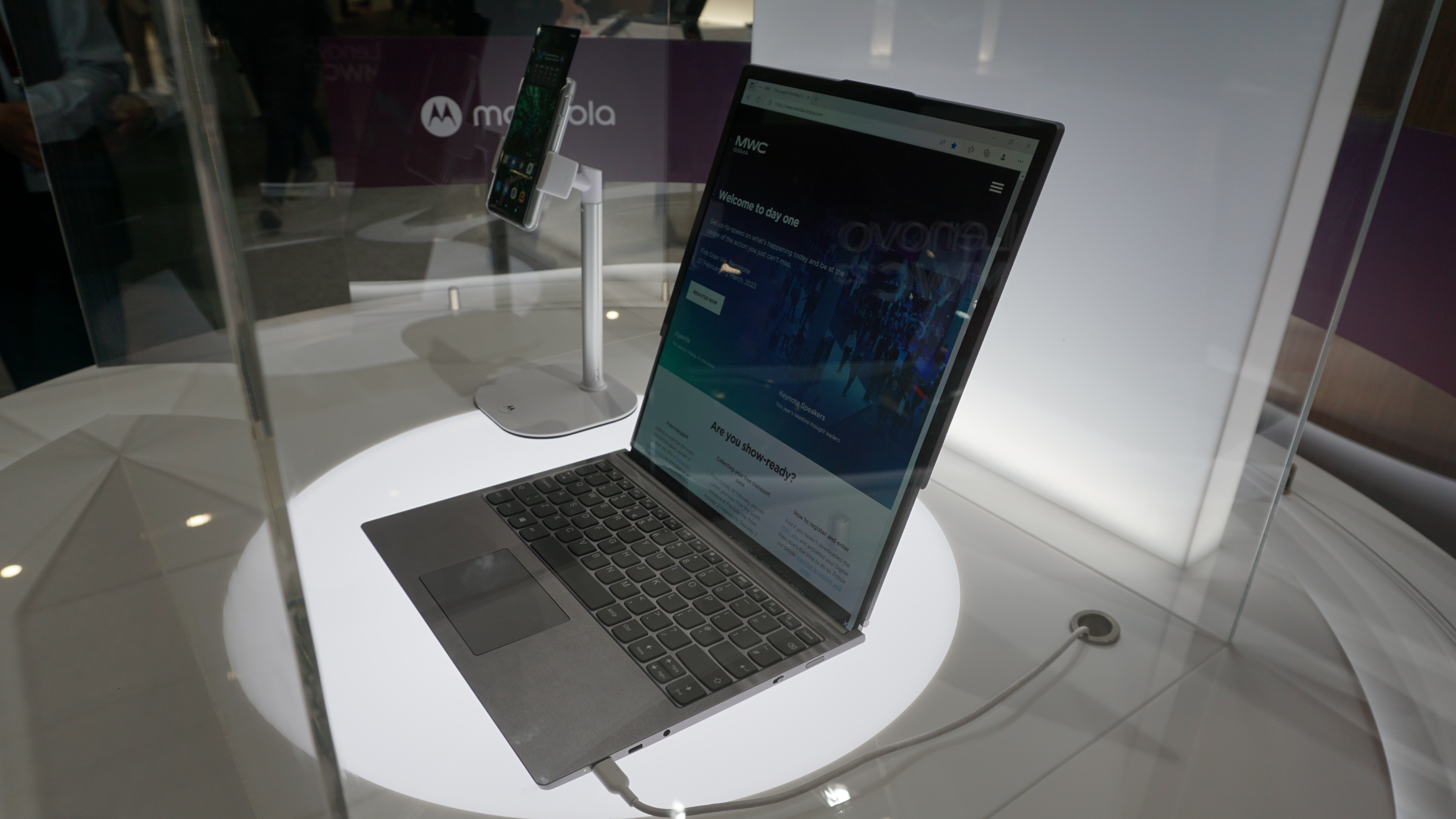
The recent shift towards 16:10 rather than 16:9 as the productivity aspect ratio of choice has demonstrated that consumers apparently are interested in taller laptop screens rather than wider laptop screens, but this feels like a bridge too far. Fully unspooled (I’m not saying ‘unrolled’), this Lenovo concept laptop is really, really tall - to the point where it feels a bit alien to look at as a regular laptop user.
When fully 'unrolled', the display is effectively equal to two 16:9 widescreen panels stacked vertically.(Image credit: Future)
The limitations of this technology
There are other complications when it comes to displays such as this. While we might be looking at a revolutionary era of flexible displays, the technology still has a way to go - Asus had to make some serious sacrifices to make the Zenbook 17 Fold OLED work without making it ridiculously thick, which included forgoing any ports larger than a USB-C and splitting the battery in two. Everything becomes harder to plan for, from portability to thermal management.
Let us not forget, though, that this isn’t Lenovo’s first dance with flexible display technology. The ThinkPad X1 Fold Gen 2 was a bold reimagining of the company’s iffy original foldable laptop, and I quite liked it in my hands-on review. A big problem with currently available foldable laptops is that they can’t reasonably incorporate a discrete graphics card, which is a shame since they would be very well-suited to digital artists and other creators.
However, this new type of display could bypass that issue. Since the ‘rolled-up’ portion of the display is tucked away at the base of the screen bezel when not in use, the whole bottom portion of the laptop is, well, just like a normal ultrabook. With foldables, manufacturers have to fit all the internal components behind the screen; here, a GPU could be implemented without any particular difficulty.
One big concern with flexible panels is durability; virtually every folding device from phones to tablets has had criticisms leveled at them for being easier to damage than a conventional display. Here, it’s even worse. We’re not just talking about the need for a durable hinge. That spooling display is motorized, which means we’ve got tiny, delicate moving parts around an even more delicate flexible display panel. I don’t mean to be a Negative Nancy here, but that’s asking for trouble.
Perhaps in five years, or ten, or twenty, we’ll be using sexy, flexy screens in every aspect of our lives. But now’s not the time - and while I do respect companies like Lenovo and Asus for pushing the envelope with interesting new designs, we’re not going to see them selling big any time soon.
from TechRadar - All the latest technology news https://ift.tt/BpiLHO0
via IFTTT
Apple’s next batch of iPad Pro tablets, which are expected next year, could be the most expensive yet, thanks to the inclusion of a rumored display upgrade.
Following on from the iPad Pro 12.9 (2022) and the smaller – but otherwise practically identical iPad Pro 11 (2022), Apple is expected to drop another two new iPad Pro models next year. When they launch we’ll likely see Apple’s best iPad tablets get a few upgrades in terms of their processor and feature set.
However, while hardware improvements are always welcome, reports are suggesting we might be a little disappointed about one update. Next year’s iPad’s OLED displays are being rumored to be a lot more expensive than the screens on the current models screens – and that means the 2024 iPads are likely to cost more too (via The Elec).
According to reports coming out of South Korea, where Apple’s display partners Samsung Display and LG Display are based, Apple is looking to use a two-stack design for its next-gen OLEDs, with two light-emitting layers rather than one. Two-stack displays are brighter and longer lasting than single-stack screens – but they also cost a lot more.
Currently, Apple’s iPad Pro displays cost an estimated $100-$150 to produce (around £80-£125 / AU$150-AU$225), but it's reported that the cost of the new two-stack screens would jump to around $270 for the 11-inch model, and $350 for the 12.9-inch (around £225, £300 / AU$400, AU$520).
If those rumors are true, Apple will almost certainly look to pass some, if not all, of the extra cost onto consumers. So if you were planning to upgrade your tablet next year, you might want to start thinking about whether you're really going to need the very latest and greatest iPad, or can perhaps make do with a slightly older and cheaper, but still solid option.
The next iPad Pro models should be brighter, and pricier(Image credit: Apple)
Analysis: Money for something
While we have to take any rumors with a pinch of salt, if the reports are true, the new iPad’s displays might actually be a worthwhile upgrade if you do choose to splash out.
Most OLED tablets aren’t bright enough to offer anything serious in the HDR department. Don’t get us wrong: the screens look great, but they aren’t delivering the full OLED effect; nothing like what you’d get from one of the best OLED TVs.
If Apple adopts this tandem structure, however, its screens should be a lot brighter than other OLED options on the market.
What’s more, the structure would give the screen a four-times longer lifespan. So if you’re someone that likes to buy a new iPad pro and then hold onto it for a few years, the 2024 models should be better equipped to deliver in that respect.
We’ll have to wait until 2024 to find out exactly what Apple’s next iPad Pro models have in store for us, but if the prices are set to go up then at least it looks like we'll be getting more bang for the extra buck.
from TechRadar - All the latest technology news https://ift.tt/wX6b8vu
via IFTTT
Microsoft is up to its old tricks of promoting Edge in an overly pushy manner, according to a new report.
Neowin relays a tale of being nagged to use the Microsoft browser with a small pop-up followed by a rather jarring full-size banner when attempting to download rival browser Chrome.
We should note from the off that this happened in Edge testing versions, and Neowin updated its article to say that only the Beta version (not Canary or Dev) is now doing this when trying to install Chrome.
What happens exactly when you try to grab Google’s browser in this case? First off, when you visit the Chrome site, a mini pop-up is displayed as mentioned, and we just tried in the release version of Edge to confirm that this happens there, too.
That’s a relatively unobtrusive nag compared to the second full-size banner at the top of the browser window, the latter being the one that only appears in testing (just Beta now, as noted). This makes its presence felt when the Chrome download starts.
Both panels tell you that Edge uses the same technology as Chrome (namely Chromium), but with the “added trust of Microsoft”, with a button urging you to ‘Browse securely now’ and use Edge rather than downloading and switching over to Chrome.
Analysis: There’s no place like Edge…
As Neowin points out, this may have been testing conducted on a limited set of Edge users, and it looks like that trialing has been cut back now (albeit still present in beta – for the time being).
Nonetheless, it’s a worrying move by Microsoft to double up on the nagging with a larger second banner; as if being given the message once wasn’t quite enough, thanks.
While Google also prompts people to use its Chrome browser on occasion, it does so from its own territory (the search engine site itself) and certainly doesn’t try to muscle in when detecting that you’re visiting a rival browser’s web page to potentially download that client and defect, as it were.
Microsoft seems to be on another big push to fire up Edge adoption, as recently we’ve also witnessed shenanigans on the mobile front. Those using the Outlook app on iOS have seen pop-ups trying to get them to open up links and attachments in Edge rather than Safari (or whatever other browser the iOS user may have chosen).
By now, we’re doubtless all getting weary at these kinds of attempts – which have been seen before, we might add – to drive up Edge market share, and we really wish Microsoft would lay off the nag stick, and try a more carrot-oriented approach.
For instance, Edge is getting its own free (albeit limited) VPN service which is rolling out in release as we type, and this is where Microsoft should be hoping to gain share – by continually making the browser better, whether that’s through new features, or better performance (or indeed both). Do enough of that, and eventually, the users will come as word of mouth spreads.
Do too much of what looks like underhand badgering – even if it’s in testing – and that won’t drive adoption, it’ll only drive folks away.
Bing Chat, the ChatGPT-infused search engine preview that's all the rage is now on your iPhone and Android phones where I found it just as wild an experience as it is on the desktop.
Actually, it's wilder. Unlike the desktop, mobile ChatGPT Bing has the added special ingredient of a voice. That's right, Bing speaks to you. There is some irony here that the most interesting thing Microsoft has done in years is also a moment to reflect on the company's last Quixotic foray into voice-enabled assistants: Cortana.
You remember Cortana, right? If you've ever played Halo, then you have at least a passing knowledge of the AI assistant who helped Master Chief navigate his world. That fictional AI persona was so popular that Microsoft adopted the moniker as a code-name for its own real-world AI assistant and then kept the name when it introduced it a decade ago.
Cortana never lived up to its AI promise and was eventually deprecated and finally removed from Microsoft products.
Another chance at voice AI
Now we have a new AI voice chatbot from Microsoft and OpenAi (via a modified version of ChatGPT) that doesn't have its own name, it simply lives inside Bing.
Still, knowing Microsoft's history, and having spent two weeks playing with the Bing chat on my desktop, I could not resist getting some voice-to-voice time with Bing mobile.
I re-downloaded the Bing search app, a mobile bit of software I haven't touched in years.
While the desktop puts the large "Ask me anything..." prompt window front and center, I had to select the small "b" icon at the bottom of the Bing app screen to access the AI-powered chat.
After installation, you'll still have to decide if you want to let the app track you (I always say "no") and give it access to your microphone so Bing can hear your query (say "yes").
It's weird but I have what might best be called AI anxiety. When faced with an artificial intelligence prompting me to "Ask it anything," I freeze up, unable to think of a single good question.
Helping on the go
I eventually settled on, "Bing, write me a haiku about being on the iPhone," which I spoke to the app.
Note, you don't have to start with "Bing." It's not a watchword and activating the ChatGPT AI-powered Bing took pressing the Bing button.
Bing took a considerable amount of time before it responded. One thing I noticed is that Bing also says what it's searching for based on your query. It's pedantic but also useful in case you hear that Bing misunderstood and you want to stop Bing's search.
After a few moments, Bing recited in a female voice that sounded a little like Cortana this original haiku:
On the iPhone screen
A world of information
Bing is here to help
Not bad and yes, it hit the 5-7-5 syllable limits for each haiku line.
I got some good ideas for dinner from Bing, and all I needed was my voice.(Image credit: Future)
Next, I asked Bing to come up with a romantic dinner for two featuring seafood and rice. The only caveat is that prep time had to be under 30 minutes.
After another long wait, Bing AI chat told me about two recipes and asked me which one I'd like. It's here, though, where the conversational aspect breaks down a bit. Instead of leaving the microphone open to receive my response, I found I had to hit the microphone button again. After doing so, I told Bing that I chose the "second one." Bing then graciously provided the Salmon and Rice recipe, which it would've read out in its entirety if I let it.
Finally, I asked Bing AI chat to play a game of Tic-Tac-Toe with me.
Bing AI Chat plays Tic-Tac-Toe, and apparently cheats.(Image credit: Future)
Bing happily agreed and presented an all-text-based playing board and, without asking me, made the first move as "X." Each time either one of us made a move, it announced the board, not just the position of the "X"s and "O"s, but the dashes and plus signs it used to make it. Fine, I could live with that awkwardness for now.
After a couple of moves, I was prepared to block Bing AI chat for a win. Unfortunately, Bing cheats and insisted it won even though the board showed that it had not.
Aside from its sketchy game moves, the mobile version of Bing AI is relatively engaging. Microsoft still needs to work on the speed if it wants this to be a truly conversational AI and to take on the likes of Siri and Alexa. Otherwise, Cortana may have given her digital life in vain.
from TechRadar - All the latest technology news https://ift.tt/uJGMwzq
via IFTTT
Beginners tend to confuse WordPress.com and WordPress.org, which, more often than not, leads them to choose the one which is not right for their needs. WordPress.com and WordPress.org are, in fact, two completely different website solutions offered by two different organizations.
To put it simply, WordPress.com offers a quick and free way to set up a site, with options to pay for functionality as the site and business grow. WordPress.org, on the other hand, offers advanced options and monetization from the start.
In the next few pages, we will delve deeper into the differences and similarities of both of these services to help you choose the right one for you and get you started on your journey of building an amazing website.
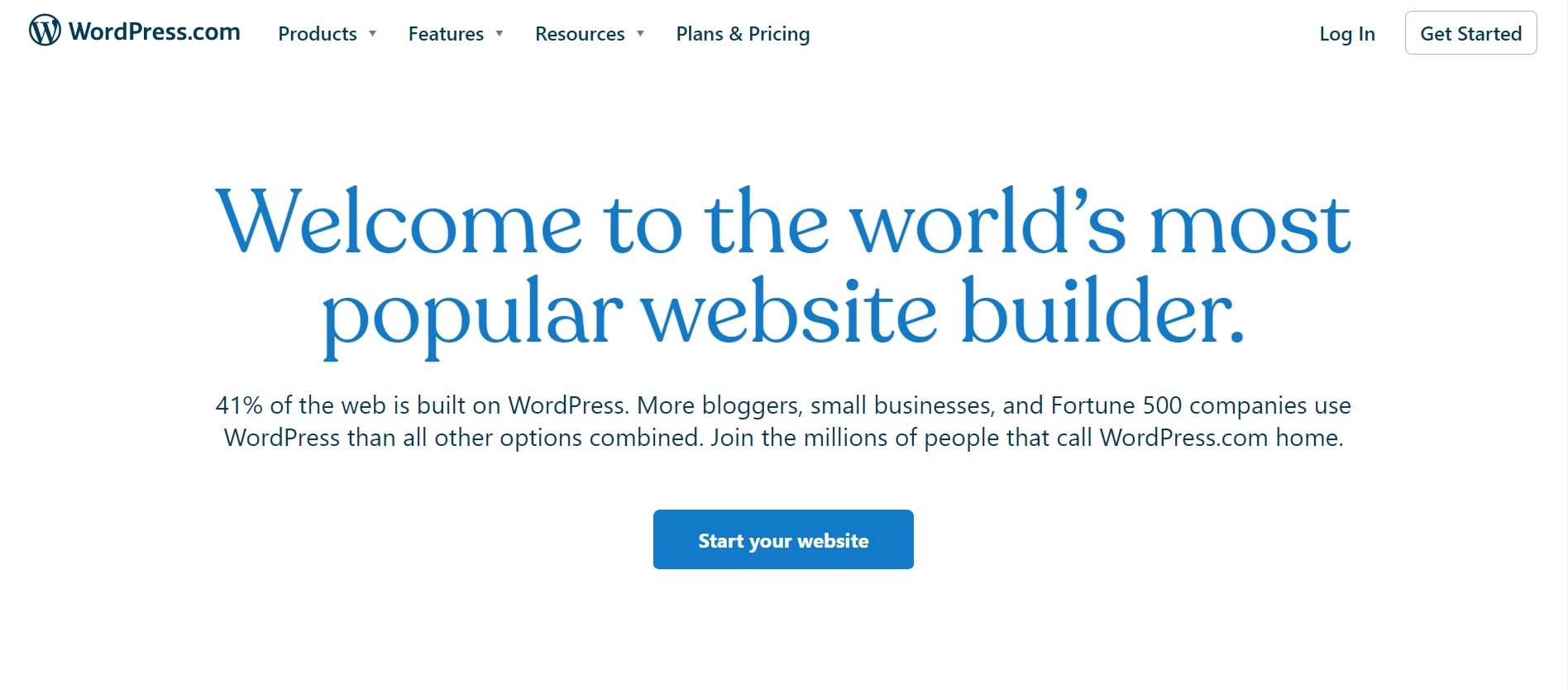
WordPress.com is a website platform that comes with a web hosting service included in all of its plans. While not as popular or powerful as its counterpart, it aims to make the website creation process easier for beginners.
Since WordPress.com is fully hosted, users can simply sign up for an account and launch their site immediately without worrying about a hosting solution. It also provides a free website address out-of-the-box.
With WordPress.com, it’s possible to create a site at no cost and switch to a paid plan later for more resources.
Easy to manage – WordPress.com will take care of site maintenance jobs such as upgrading software, managing your web server, and securing your website.
Requires minimal effort to start a website – setting up a WordPress.com site is straightforward since it already comes with hosting and a domain name.
Suitable for bloggers – WordPress.com has all tools needed to start a fully functional blog, allowing users to get their site live and running in no time.
There also some negative aspects to consider before choosing WordPress.com, such as:
Ads on free websites – if you start with the free option, your site will display ads from WordPress.com, making your website look less professional. You’ll need to upgrade to a premium plan to remove these ads.
No monetization ability – users can’t monetize their site with WordPress.com’s free service unless they purchase its Premium option that costs $18/month.
Limited access to plugins – you need to choose either WordPress.com’s Business plan or a more powerful one in order to install plugins on your website.
Lack of customization options – when using the free service, you’ll have limited access to WordPress.com themes and customization options.
Restricted access to the website stats – with the free plan of WordPress.com, users can’t install Google Analytics or other tracking platforms.
WordPress.com is an excellent platform for beginners to start a website for free. However, the service is quite limited when it comes to features, even if you’re on one of its premium plans. Unlocking the more advanced features requires a Business plan, which costs $40/month.
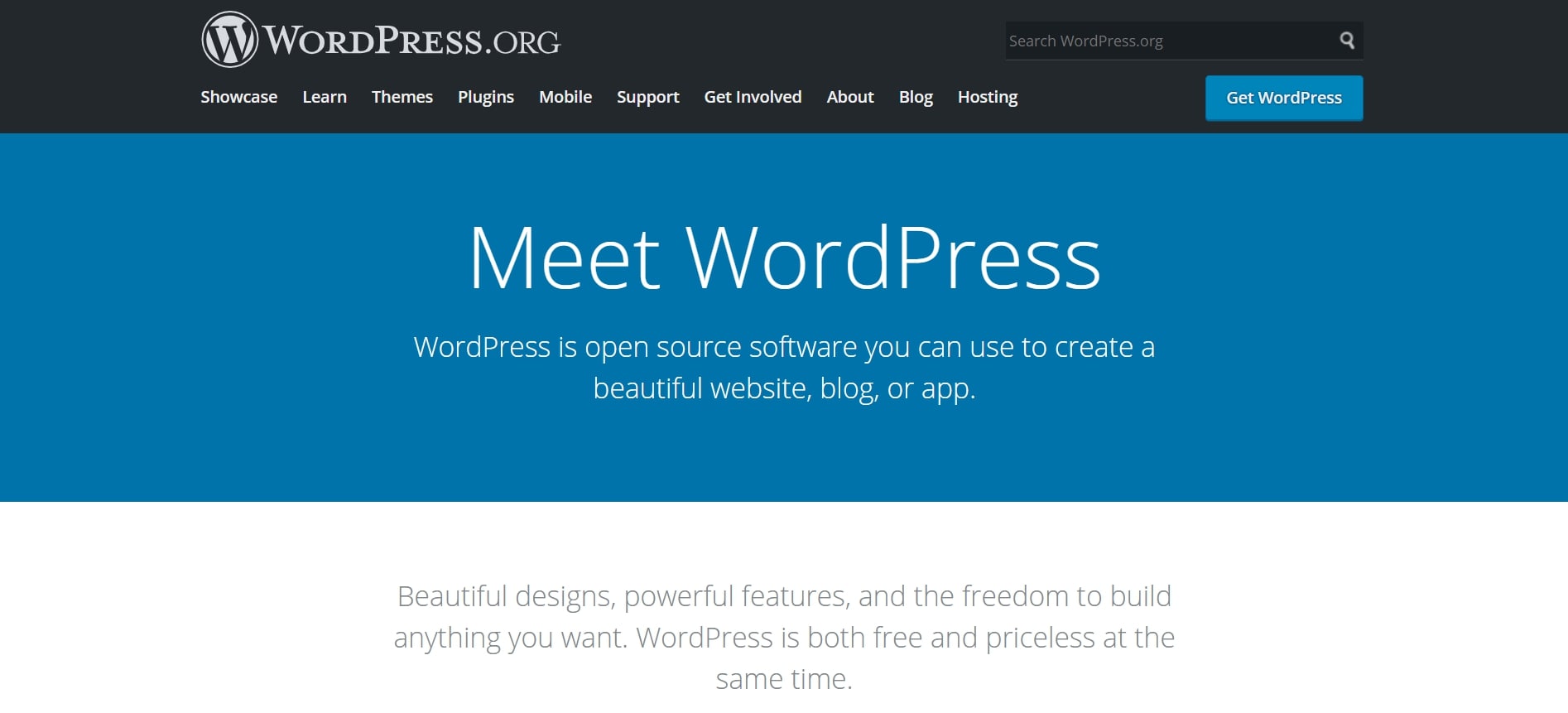
WordPress.org is an open-source software that’s free to download and install. This CMS is highly customizable thanks to its wide selection of themes and plugins and is fit for any type of website, from blogs to eCommerce stores.
However, to use it to its fullest users need to purchase a domain name and a hosting service.
Luckily, many web hosts offer cost-effective WordPress hosting solutions. Some of them are:
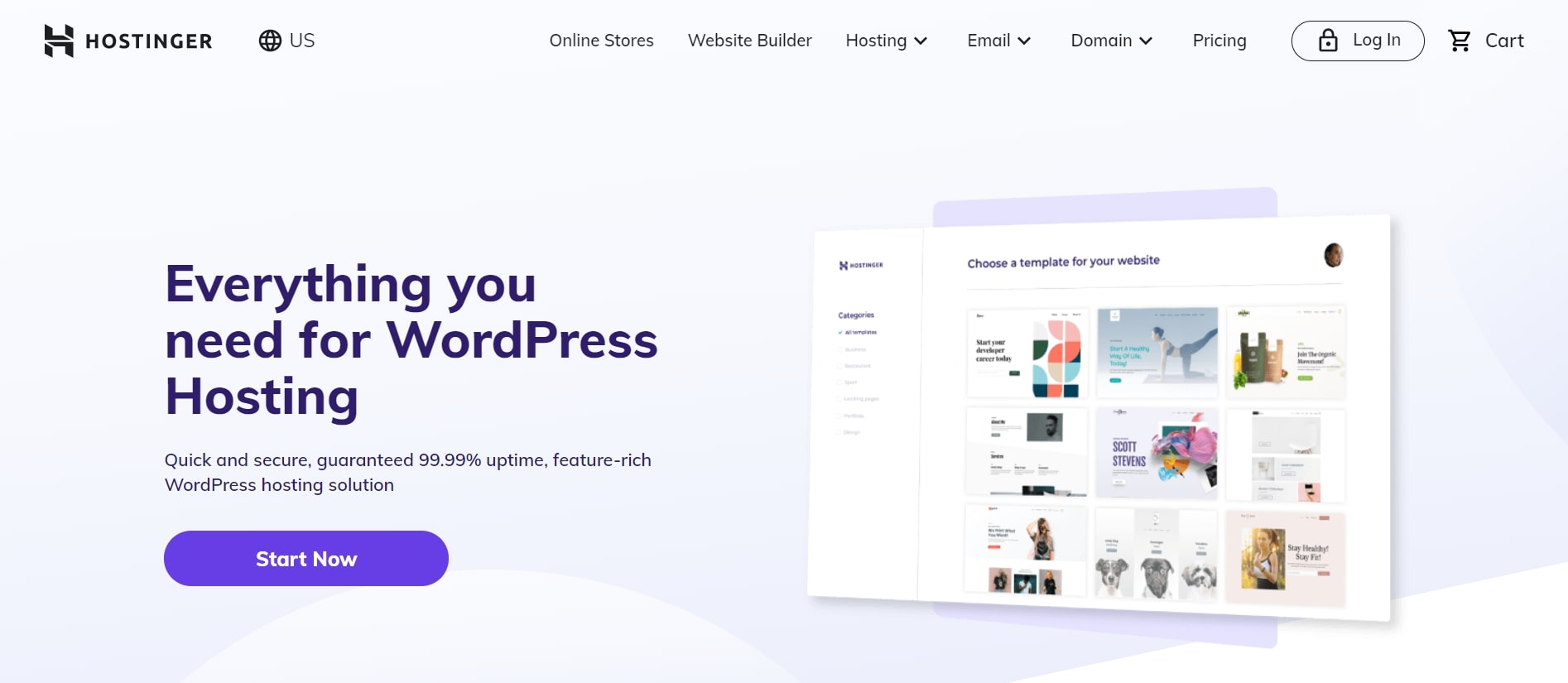
Hostinger – a great performance web host with an intuitive control panel. Their WordPress hosting plans start from $1.99/month. Check out our Hostinger review for an in-depth look.
Bluehost – offers various hosting services, including WordPress hosting plans (opens in new tab) that start from $2.95/month. Our Bluehost review showcases the pros and cons of using this web host.
GoDaddy – provides one-click installations for WordPress and other popular CMSs. This hosting company also offers four WordPress hosting plan options (opens in new tab), starting from £5.99/month. Read our GoDaddy review for more information.
Unlike WordPress.com, WordPress.org won’t display any ads on your site.
Here are more benefits of choosing WordPress.org:
Flexibility – users are free to customize their site and improve its functionality using any themes and plugins they want. People with coding knowledge can also utilize their own templates and tools.
A wide range of third-party plugins – there are thousands of tools available that integrate with the WordPress.org software, supporting or expanding such features as lead generation, SEO, and email marketing.
Monetization – unlike WordPress.com, WordPress.org lets you run ads and sell products directly from your website.
Supports scripts – WordPress.org users can add tracking scripts like Google Analytics on their site without limitations. This is a great advantage for those who want to use their site metrics to make data-driven decisions.
Before starting with WordPress.org, ensure you consider these aspects as well:
Purchase a hosting service – it’s essential to look for a web host if you want to use this self-hosted platform. Thankfully, many hosting providers offer affordable and beginner-friendly plans, coupled with a one-click WordPress installation option and support.
Responsible for website maintenance – WordPress.org users are responsible for their own backups and updates.
Although it might take longer to create a website with WordPress.org software, this platform offers more flexibility to build any kind of site you want.
Both WordPress.com and WordPress.org offer robust features, but the right platform for you depends on your website’s goals, budget, and skill set.
Let’s compare WordPress.com vs. WordPress.org based on their pricing, features, platform flexibility, security, ease of use, support, and monetization options.
Price
An important factor to look out for when picking your future website software is the price – it’s crucial to ensure that your budget can cover the upfront costs and long-term fees of using the platform.
People who want to spend little to no money on their sites can start with WordPress.com’s free plan – they will get up to 3 GB of disk space and a domain name with the .wordPress.com subdomain.
However, this option comes with WordPress.com’s branding ads, and users have to purchase a premium plan to remove them.
WordPress.com’s premium options for regular websites cost between $9-$70/month. All of these paid options include a free custom domain name during the first year.
The cheapest plan offers 6 GB of storage space, no branding ads, and the ability to upload audio files.
WordPress.com also offers plans for enterprises that start at $25,000/a year. These options include a content delivery network (CDN) hourly backups, and a GitHub repository.
As for using WordPress.org, you’ll need to look for a domain name and a web hosting provider before getting started.
(Image credit: Hostinger)
If you go with a popular web hosting company, such as Hostinger, the prices will be lower than the WordPress.com premium plan
Hostinger’s WordPress hosting solutions range from $1.99-$9.99/month. With its lowest-tier plan, users will get 50 GB of storage space, 24/7 live chat support, and free WordPress themes and plugins.
It’s also possible to purchase a custom domain name from Hostinger, making it more convenient to keep and manage your hosting and domain registration in one place.
A custom domain name usually costs between $0.99-9.99/year. But users can get a free domain if they opt for Hostinger’s WordPress Starter plan that costs $2.99/month.
With WordPress.org, you’re free to start with the basic hosting plan and only upgrade it when your site grows and needs more resources.
If you’re a beginner and looking for a way to start a website for free, WordPress.com can be a good choice. However, if you intend to build a business website or any other large personal project without going over your budget, consider choosing WordPress.org.
Features
When picking a website platform, look for a service that will provide you with all the necessary features for your project, such as customization options, analytics, and SEO tools.
WordPress.com, for example, comes built-in with the essential features to build a fully functioning blog.
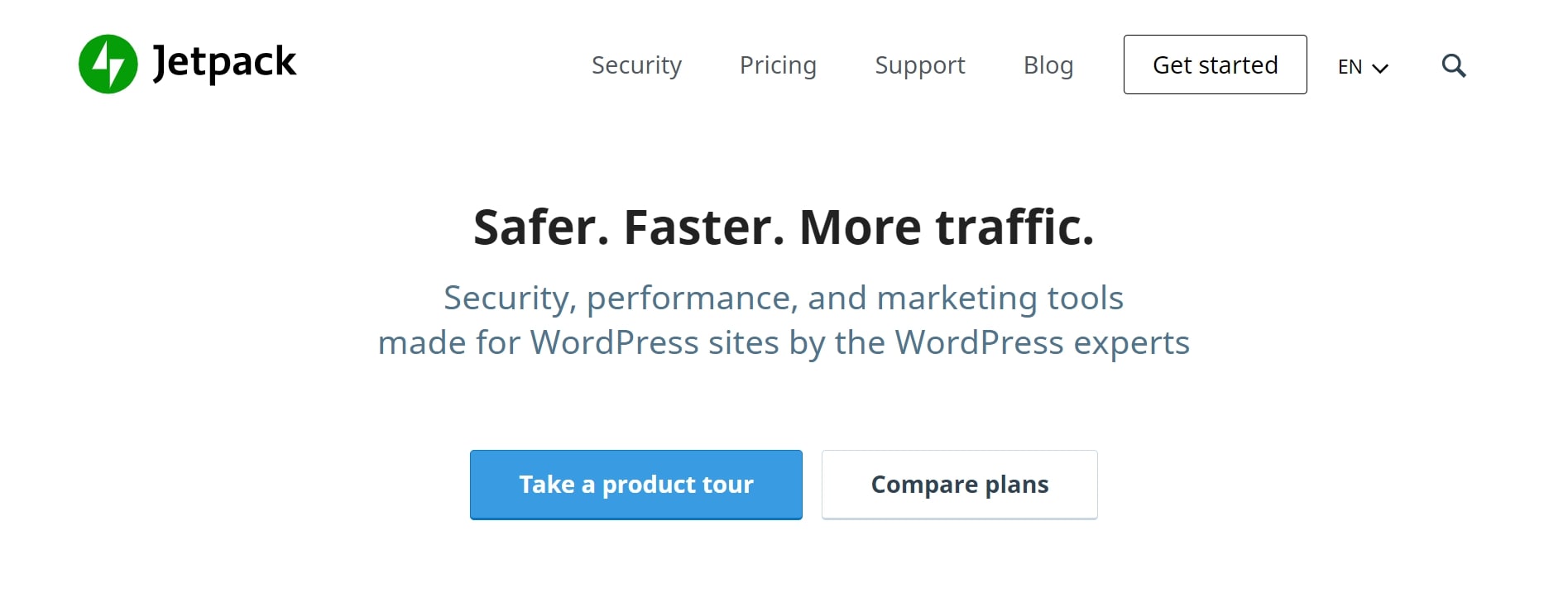
(Image credit: Automattic)
Its free plan also includes Jetpack, plenty of free themes to choose from, and the ability to make simple changes on your WordPress site template.
However, you’ll need to upgrade to WordPress.com’s Premium plan to access more templates and advanced design customization.
Unlike WordPress.com, WordPress.org lets you fully customize a website regardless of the hosting plan you choose. Using this platform, you’re able to modify your site through code and plugins and make full use of the best WordPress themes available on the internet.
WordPress.org users can also install and use Google Analytics straightaway to track site metrics like bounce rate, time spent on pages, and conversion rates.
Meanwhile, Google Analytics isn’t available on WordPress.com’s free plan and lowest-tier premium plan.
Both WordPress.com and WordPress.org have the same high-quality SEO performance. However, WordPress.org gives you more flexibility to make manual changes to improve your site’s SEO, thanks to the many plugins available.
It’s worth noting that WordPress.com only includes advanced SEO tools on its Business, eCommerce, and VIP plans.
With WordPress.org, users can customize and add tools to their sites from the start. On the other hand, WordPress.com requires web owners to upgrade to a higher plan to acquire more features and customization options.
Another difference between WordPress.com vs. WordPress.org is how each platform extends a site’s functionality.
With WordPress.org, you have full access to the code that powers this software, allowing you to create custom tools or implement any extra functionality to fit your needs.
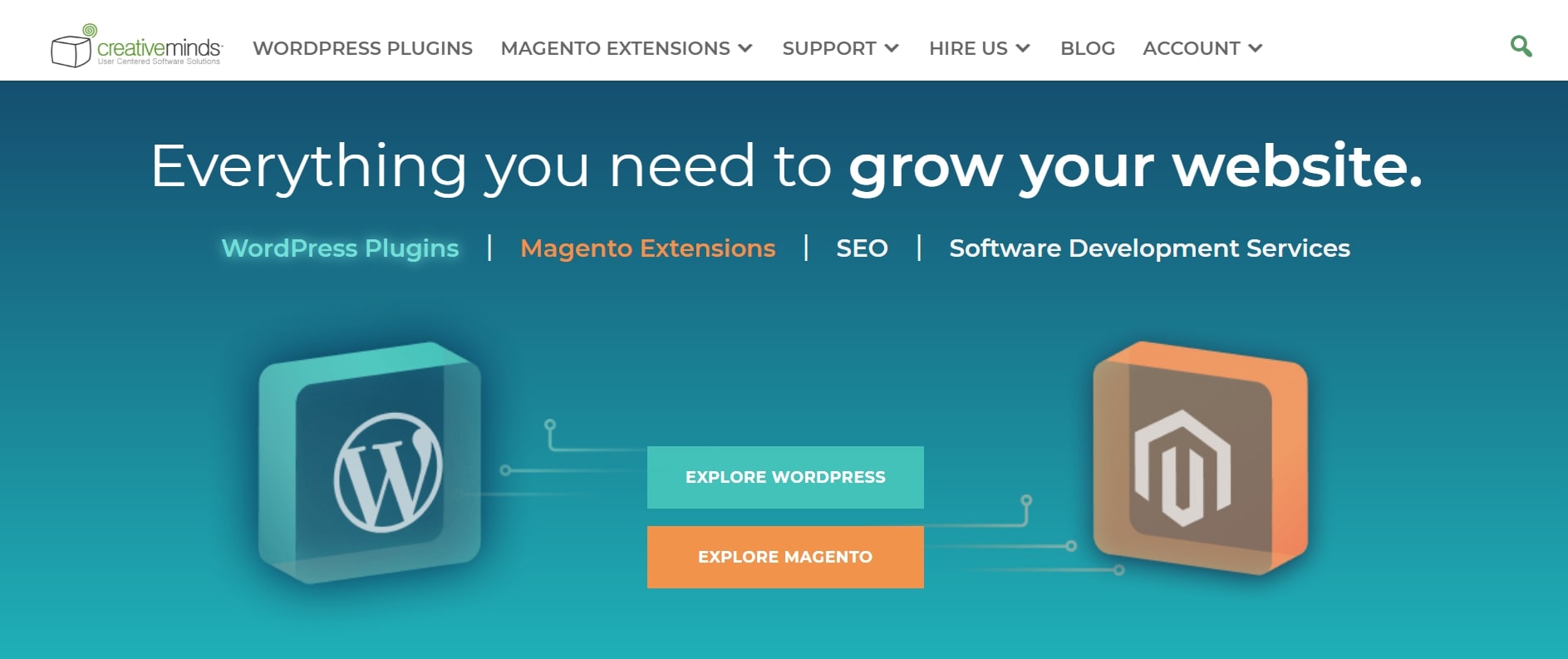
(Image credit: CreativeMinds)
The self-hosted WordPress.org also lets you install the best WordPress plugins to enhance your site’s performance. It’s also possible to use other free and premium third-party plugins from websites such as CreativeMinds.
On the flip side, plugins are only accessible on WordPress.com’s Business, eCommerce, and VIP plans.
For a simple website or blog, the built-in features of WordPress.com’s free, Personal, and Premium plans might suffice.
However, for those who want the freedom to modify their site without any additional payments, WordPress.org is the go-to choice.
Security
To ensure that your site is safe from malware and other cyber attacks, pick a platform that offers security tools out-of-the-box.
With WordPress.com, web owners won’t need to worry about any maintenance issues, as they will be automatically taken care of.
Moreover, users can’t access and modify their web server configuration, helping to protect their WordPress.com site from security risks.
WordPress.com also includes a pre-built SSL certificate on all of its plans, which will protect the site’s data and its visitors’ personal information.
WordPress.org’s system is also secure by default. However, users are responsible for updating the software regularly and taking care of backups on their own.
Moreover, many hosting providers provide additional security features that help protect your WordPress site. For instance, Hostinger’s WordPress plan includes weekly backups, a free SSL certificate, and the Cloudflare DNS Firewall to safeguard a website from DDoS attacks.
Using WordPress.com means your site will be secure and easy to maintain from the start. However, WordPress.org gives more options to secure your website further.
Ease of Use
A website platform should also be easy to use, ensuring that anyone can build a website without having to master its intricacies and spend hours coding.
WordPress.com and WordPress.org offer a similar user experience and page builders for content creation. The difference is that setting up a WordPress.com site is quicker than starting a WordPress.org website.
With WordPress.com, users simply need to create an account from this platform’s official homepage. Then, they can pick a template from a collection of pre-made themes, make a few changes, and start adding content to the site right away.
Meanwhile, setting up a site with the WordPress.org software requires more steps, including registering a custom domain name and choosing a hosting plan.
Fortunately, many hosting companies like Hostinger provide a one-click installer, allowing users to install and create a WordPress.org site quickly.
WordPress.com is an excellent platform for those who want a hassle-free way of setting up a website. If you pick the right hosting provider, however, it should be as easy to create a website with WordPress.org.
Support
Support is another critical aspect to discuss when comparing WordPress.com vs. WordPress.org – it determines how fast and efficiently a user can get help when facing a problem.
WordPress.com offers different types of support for each of its plans. With the free service, users can only ask for help on the WordPress community forums.
Those who sign up for any of the WordPress.com premium plans will be able to access the email support. However, gaining assistance via the 24/7 live chat support will require upgrading to WordPress.com’s Business plan.
On the other hand, WordPress.org offers no direct support from the platform itself. Instead, it provides a community support forum and extensive documentation.
WordPress.org users can also get help from their web hosting provider. For instance, Hostinger offers 24/7 support via email and live chat, ready to lend a helping hand whenever you need them.
Other than that, users can learn from the many resources on the internet covering WordPress.org topics.
Those who are new to web development should consider using WordPress.org and picking a hosting provider with a support team that is available anytime. The open-source platform also has a large support community, offering a lot of self-help resources.
Monetization Options
If you want to generate income from your site, it’s crucial to choose a platform that offers several monetization options.
With WordPress.com, the choices to make money from a website are limited. Users on free and Personal plans can’t monetize their sites at all.
WordPress.com also places its ads on free sites without sharing the earnings with the web owners.
(Image credit: BuySellAds)
To integrate with monetization tools like Google AdSense and BuySellAds, users also have to upgrade to the Premium plan at a minimum.
Before you get to sell online, it’s also essential to sign up for WordPress.com’s eCommerce plan. This option lets you accept payments in over 60 countries, sell unlimited products, and integrate with top shipping carriers.
In contrast, the self-hosted WordPress version allows you to monetize your site in any way without restrictions, from selling physical items to embedding referral links into blog content.
Although it’s possible to make money online with WordPress.com, it’s much more efficient to use WordPress.org when building an online store or selling ad space on a website.
Which do we recommend?
Knowing the differences between WordPress.com vs. WordPress.org is crucial for deciding which platform to choose for your online presence.
In the end, the right choice will come from knowing your goals, budget, and skill set to determine which platform is the right choice for you. If you’re looking for great customization options and the ability to build any website that you imagine, then WordPress.org is the right choice for you. If you lack the technical knowledge and are looking to build a site using ready-made templates without worrying about the budget too much, then WordPress.com is your go-to platform.
Also check out our complete list of the best web hosting services
February 21, 2023 at 07:15PM from TechRadar - All the latest technology news https://ift.tt/ZbBfpg9
via IFTTT
Microsoft seems to be planning to add mouse gestures to Edge in order to give users a fresh set of options for performing common actions, despite indications in the past that this feature is not something that’ll be supported.
Neowin reports that Edge policy documents have recently been updated to include a section on configuring the mouse gesture feature, with support planned to debut in version 112 of Edge, according to the documentation.
In other words, this feature isn’t even in testing yet, but it should be inbound for beta versions of Microsoft’s web browser before too long.
Mouse gestures are used in other browsers to great effect, so for example, you hold the right button and move the mouse up or down, left or right, or draw some kind of pattern to activate a corresponding action.
Analysis: Welcome to the world of power browsing
This is pretty nifty stuff for those who like to use shortcuts, and power users in particular. It can put a whole lot of actions easily within convenient reach, so you can accomplish common tasks like refreshing a web page, for example, or closing a tab, with just a swish of your mouse.
What’s a bit odd here is that Microsoft has previously said this feature wouldn’t be coming to Edge. In fact, mouse gestures have been a popular request when it comes to feedback for what Microsoft can do to make Edge better, but in the past, the software giant hasn’t paid much heed to those cries.
Indeed, as Neowin points out, in a recent feedback summary on possible Edge additions for November 2022, just a few months ago, support for mouse gestures was marked as “not planned”.
It seems something has changed since then, and Microsoft has started listening – hopefully. We’ll find out soon enough, as Edge 112 is only a couple of versions away (the beta is currently v110).
Chromebooks are getting a change for the better in a big way with the ability to fully redefine keyboard shortcuts having been spotted in testing with Chrome OS.
About Chromebooks spotted that the latest beta version of Chrome OS 111 contains a revamped keyboard shortcuts app that allows you to remap those shortcuts as you please.
Now, this functionality isn’t working yet – you can change the shortcuts in the new panel, but they aren’t actually enacted, because this is still early testing for the feature.
In fact, the shortcuts app is still hidden to testers in the Chrome OS 111 beta, and you have to mess about with some experimental flags to find the relevant panel.
Even so, it’s great to see that the ability to customize your own shortcuts is incoming for Chrome OS.
Analysis: An easier life for people migrating to a Chromebook
This isn’t a great surprise as for quite some time now there have been reports that Google is planning to bring this functionality to Chrome OS.
At the moment, it’s only possible to redefine a few basic elements of the keyboard (like switching the function of the ‘search’ key for example). With this change, you’ll have full rein over the entire library of shortcuts (in theory anyway, if the final implementation pans out as it looks now).
This means those who are more used to a Windows or macOS system can keep their favorite shortcuts from those platforms by remapping them under Chrome OS, making their everyday computing life easier on a Chromebook (perhaps one that they’ve just bought which is completely new to them).
It’s possible that this feature has been in previous beta versions of Chrome OS, and About Chromebooks has only just found it. So, Google might have been playing around with the concept in the background for a while now, with any luck, and we’ll see it actually debut in beta soon enough, with any luck – and then in release thereafter.
Google Chrome now supports new Nvidia technology that upscales video playing in the web browser with what look to be seriously impressive results, or at least this feature is now live in testing.
VideoCardz (via Tom’s Hardware) noticed the preview release of the tech which is called Nvidia RTX Video Super Resolution, and is basically the equivalent of DLSS, but for video in the browser. Nvidia showed it off back at CES 2023, and for example ran a clip of Apex Legends recorded at 1080p, which was upscaled to 4K; and it looked very smart indeed (see the video clip below).
Like DLSS, RTX Video Super Resolution (VSR) uses AI to upscale the footage and can work its magic on anything from 360p up to 1440p resolution videos.
Is there a catch? Sort of, because as the name suggests, this is for RTX graphics cards only – and Nvidia only supports newer RTX 3000 and 4000 models. Those with an RTX 2000 family GPU aren’t able to benefit – at least not initially (we’ll come back to that).
As mentioned, VSR is in testing currently, as an early stable update for Google Chrome to be precise, before rolling out fully in the near future (with Chrome version 110). The feature will be coming to Microsoft Edge as well (which is based on the Chromium engine, too), but it’ll also need a new GeForce driver to work along with the finished release in the respective browser.
Analysis: Notching up Netflix stream quality – and much more
We’re really interested to see this actually in action, because the results Nvidia has demonstrated look compelling, to say the least. But sadly, this writer will have to rely on feedback from others, as he only has a 20 series RTX graphics card in his PC.
The good news, though, is that Nvidia has promised to bring support for the tech to RTX 2000 cards in the future, although we don’t have a timeframe (we were told on Twitter that the “RTX 20 series [is] coming later”).
For those using Google Chrome (most people), or indeed Edge, who have an Nvidia RTX GPU, this could be a huge step forward for watching videos in the browser, from game streaming through to Netflix viewing, and, well, anything really. It’ll be very cool to be able to watch a film on Netflix for example at Full HD and get that upscaled to 4K in the browser, if the results do indeed work as smoothly as the game footage Nvidia showed off at CES.
Remember, the tech might go into Chrome very soon, but you won’t be able to use it until the next GeForce graphics driver arrives, which is expected to land in late February (assuming no hiccups). When that happens, you’ll also need to turn on the feature in the Nvidia control panel (it won’t be set to run by default).
February 06, 2023 at 03:01PM from TechRadar - All the latest technology news https://ift.tt/Sa54fK9
via IFTTT
We know that the OnePlus Pad is on the way, and will be getting its full unveiling in just a few days time. Now a newly leaked image gives us a better look at the Android tablet than we've had up until this point from official sources.
The picture comes from the regularly reliable Evan Blass (via GSMArena), and shows almost the entire back of the tablet, together with a lot of the front. The OnePlus logo and a large-ish camera bump are visible, together with the Halo Green coloring.
You can see that the leaked image matches the first official picture of the OnePlus Pad that was shown off in a TechRadar exclusive. This second image does give us a better look at the device as a whole though, from a more revealing angle.
Knowns and unknowns
There's still plenty we don't yet know about the OnePlus Pad of course, including how much it's going to cost and what's going to be on the inside (there have been rumors about internal specs, but nothing is official so far).
OnePlus has confirmed that the tablet is going to have an aluminum alloy body and a cambered frame, which makes us think that this will be a well-built device. There's also that Halo Green color, which may or may not be the only available shade.
All will be revealed at the OnePlus launch event on February 7, and we will of course be bringing you every announcement on the day. The date will also mark the international launch of the OnePlus 11 flagship smartphone.
Analysis: more Android tablets please
We've lost count of how many devices are in the Apple iPad line at any given point in the year, but as far as Android tablets go it's been slim pickings in recent years. The Samsung Galaxy Tab S8 is definitely the exception rather than the rule.
One of the reasons for this is that many Android apps aren't particularly well optimized for larger screens. Considering there aren't that many tablets out there, this turns into a feedback loop – developers won't make the effort for a smaller number of users.
We have seen Android tablet success stories though, including the hugely popular Google Nexus 7 of many years ago, and the low-cost Amazon Fire tablet series, including the recent Amazon Fire HD 8. Android tablets can work, if they're priced right.
With the OnePlus Pad and the upcoming Pixel Tablet from Google, we're hoping that Android tablets can once again have a moment. There's no reason these devices can't match the iPads for work and content consumption.
Twitter is set to introduce a feature whereby it’ll show a badge to indicate that an account has been ID-verified, at least going by a new leak.
Jane Manchun Wong, a software dev and reliable source of spillage on the social media platform in the past, just shared this info in a tweet which we should naturally regard with the usual skeptical stance that all rumors deserve.
Twitter is working on showing you whether an account is ID verified pic.twitter.com/t8Qo5uT0B9February 1, 2023
Wong further explains the process of getting ID verified: “There’ll be a flow for uploading your legal ID and your selfie for the purpose of confirming your identity.”
Analysis: Making Twitter a less toxic place, perhaps?
ID verification would obviously mean a level of surety that any account which is verified is who they claim to be, and could have ramifications for lessening the overall toxicity of Twitter (which is definitely a problem). Attacking or trolling other denizens of the platform is generally carried out under the cover of anonymity, after all, and with an ID-verified account, that would no longer be possible – with Twitter potentially deprioritizing non-verified posters eventually, perhaps.
In the same kind of vein, this could also be used as a weapon against misinformation, another serious issue that Twitter struggles with. At least in theory anyway, although just having your identity verified is no guarantee that an account holder won’t be a pedlar of ‘fake news’ and the like – as we’ve seen, there are plenty of folks across all social media platforms who are happy to stand fully behind, shall we say, dubious assertions (at best).
If you’re worried about privacy or other issues from trusting Twitter with your ID info, you’re not alone. As one reply to Wong read: “Are the ID images stored in Twitter servers? Cause chucklehead seems to just walk by and shut them off on a whim.”
Wong assures us that: “A third party will handle that.”
All of this is rather talking like this is a done deal, mind, which it most certainly isn’t. Watch this space…
February 01, 2023 at 04:34PM from TechRadar - All the latest technology news https://ift.tt/AGYeOV0
via IFTTT